

How to choose a massage table for your practice
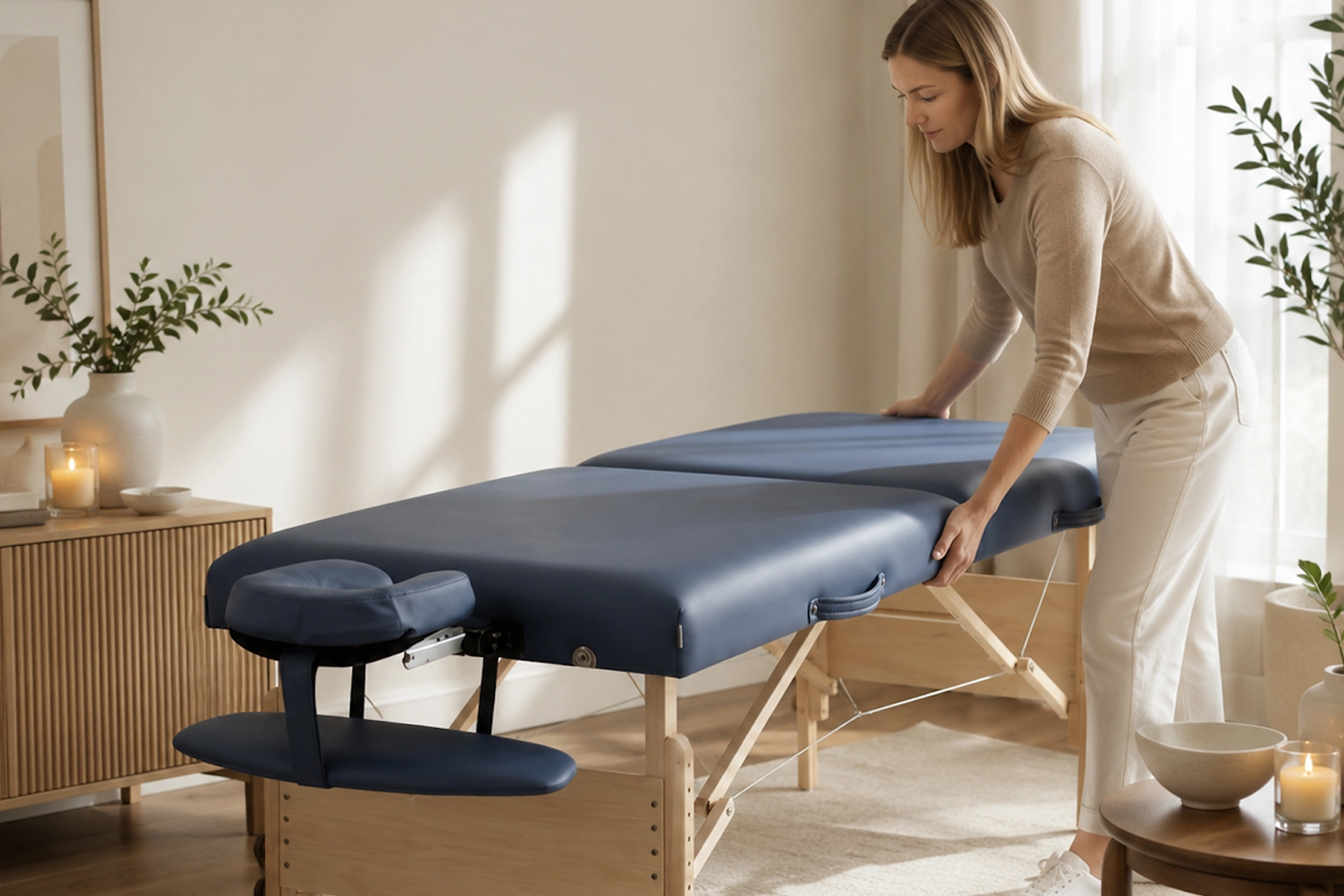
Choosing a massage table is one of the first decisions that shapes how your practice feels day to day. It affects your clients’ comfort, your body mechanics, and how smoothly you move through appointments.
Key takeaways
- Choose your massage table based on your practice model, not price alone.
- Prioritize stability, height, width, portability, comfort, and adjustability.
- Your table is part of a bigger setup that includes booking, intake, notes, payments, and follow-ups.
Many massage therapy graduates buy their first table based on two things: what they used in school and what fits the budget. Both are understandable, but neither is always the best way to choose equipment that you may use for years.
If you are wondering how to choose a massage table, start with the way you plan to practice. A mobile therapist, a clinic-based therapist, and a hybrid practitioner will each need something different. The goal is not to buy the most expensive table. It is important to choose a professional massage table that fits your work and your clients.
Your massage table is part of your workflow.
Before you look at a single table, you need to answer one question: will you be mobile, clinic-based, or both? The table you need is completely different depending on the answer.
For a mobile massage practice, portability affects the whole workday. You need to carry the table, fit it into your vehicle, set it up quickly, and move between appointments without adding unnecessary strain. For a clinic-based practice, stability, adjustability, and long-term comfort may matter more. For a hybrid practice, you may need to balance both.
Think about:
Will the table stay in one room or will you move it often?
If you are unsure about your practice model, think through the operational realities before committing to equipment. Where will appointments happen? Will the table stay in one treatment room, or will you move it often?
Choosing a massage table as a mobile practitioner
Build Quality & Weight Capacity
Make sure the table can handle your largest clients comfortably, with a safety margin. Don't just look at the maximum listed weight. A table that flexes under pressure does not inspire confidence.
Build quality. Look for a professional-grade table with sturdy hinges, durable foam, and a comfortable face cradle.
Portability & Case Quality
Every pound matters when you're carrying it daily. The difference between a 28-pound table and a 35-pound table is significant over the course of a year.
Does it come with a proper carry case? How does it fold? How quickly can you set it up and break it down between appointments? These aren't minor details when you're doing four or five mobile visits in a day.
Choosing a massage table for a clinic-based practice
In a clinic setting, you have three broad options: stationary fixed height tables, stationary adjustable tables, and hydraulic or electric lift tables.
Fixed-Height Stationary Tables
These are the simplest options and often the cheapest. You set the height once, and that is your height from now on. This can work if your treatments are consistent and the height suits your body. But if you see a wide range of clients or treatment types, it may limit how comfortably you work.
Adjustable-Leg Stationary Tables
These are adjustable in theory. You unscrew the legs, change the height, and tighten them again. In practice, most therapists will not do this between clients. It takes too long and interrupts the flow of the day.
That does not mean these are bad tables. If table height is less critical, a well-built adjustable table can serve you well. Look for good foam density, a sturdy frame, and a proper face cradle.
Hydraulic Or Electric Lift Tables
A hydraulic or electric massage table adjusts with a pedal or button. Between clients, you can set the height for the next person’s body type and your treatment plan. Deep tissue on a larger client? Lower it. Relaxation massage for a smaller client? Raise it.
An adjustable-height table is not just about convenience. It can help you adapt your setup to different clients, different treatments, and different days in your practice.
If a hydraulic or electric table costs more upfront but lasts for years, it may be easier to justify when you consider comfort, efficiency, and long-term use.
Massage table features that matter most
Once you know your practice model, look at the features that affect daily use. Product photos can make many tables look similar, but the real difference shows up when you use the table all day.
Stability and working weight
When a client sits on the edge of the table, it should not wobble. When you apply pressure, it should not shift. Some cheaper tables can sway or flex under load. That affects client comfort and your ability to work with confidence.
Test this in person if you can. Sit on the edge, push down on one side, and have someone lie on it while you apply pressure. Also, review working weight, not just static weight. Static weight usually refers to weight at rest, while working weight is more relevant during treatment.
Table width and height
Wider is not always better. A table that is too wide forces you to reach further, which can strain your lower back and shoulders. A table that is too narrow can feel unstable for larger clients.
Most standard tables are between 28 and 32 inches wide. Try different widths before you buy. Your body proportions, treatment style, and client base all matter.
Height matters too. Your table should allow you to work without lifting your shoulders, bending awkwardly, or relying too heavily on your wrists.
Padding, upholstery, and care instructions
Adding affects client comfort and how the table holds up over time. A table can feel soft at first, but lose support quickly if the foam is low quality. Look for a table that feels comfortable, supportive, and durable enough for daily professional use.
Upholstery also matters. The table needs to be cleaned regularly and maintain a professional appearance. Ask how the material responds to cleaning products and whether replacement parts are available.
Face Cradle Comfort
Nobody thinks about the face cradle until clients start commenting. Your client may be face down for 30 to 60 minutes. If the cradle is uncomfortable, too tight, too narrow, poorly padded, or difficult to breathe through, that becomes their experience of the treatment.
Test it yourself. Lie in it for ten minutes. Can you breathe easily? Does it put pressure on your cheekbones or forehead? If it is not comfortable for you, it probably will not be comfortable for your clients.
Warranty, Parts, and Local Support
Understand what the warranty covers, how long it lasts, and what happens if something breaks.
Before you buy, ask:
What does the warranty cover? How long does it last? Where are spare parts sourced? What is the turnaround for a warranty claim?
Your massage table should fit your practice - not the other way around
If a significant portion of your practice will be prenatal massage, look at tables or support systems designed for pregnancy, such as side-lying bolsters or convertible sections. A standard table may work, but a purpose-built setup can be safer and more comfortable for the client.
If you do a lot of sports therapy or deep tissue, prioritize a lower minimum height on your lift table so you can use your body weight effectively. If you focus on relaxation massage or lighter modalities, your investment may be better placed in a high-quality stationary table with strong comfort feature.
Think beyond the table: Set up the systems around your practice
A massage table supports the treatment. The systems around it support the workday.
Once you have the right table, think about what happens before and after each appointment. How will clients book with you? How will they complete intake forms? Where will you keep clinical notes? How will you collect payments, send receipts, manage follow-ups, and keep track of your schedule?
When your tools work smoothly together, you spend less time catching up on admin and more time focused on care.
Noterro helps massage therapists manage the admin around care, from online booking and intake forms to charting, payments, appointment reminders, and follow-ups. It is a practice management software built to support the way allied health professionals work.
Choose a Massage Table That Supports the Way You Work
Your table is not the place to cut corners. It's the one piece of equipment you'll use for every single treatment, every single day, for the duration of your career. It affects your body mechanics, your client experience, and your professional longevity.
Don't buy based on what your school had, what a sales rep recommends, or what costs the least. Test tables in person if possible. Lie on them. Treat on them. Adjust them. Sit on the edge like a client would. Ask about warranty, weight capacity, and replacement parts.
When your table, tools, and systems work together, your practice becomes easier to manage. The right setup can reduce friction, support your clients, and help you move through the workday with more confidence.
When you're ready to think about the rest of your practice setup, from scheduling and booking to charting and clinical notes, Noterro is built for practitioners like you.
Explore practice management software for massage therapists
FAQ
How much should I expect to spend on a professional massage table?

How long should a good massage table last?
Can I start with a cheaper table and upgrade later?
Should I buy my table online or in person?
How do I know what table height is right for me?
Share




.webp)
.webp)
.webp)