No items found.
Free Webinar · May 7 · How to Get (and Keep) More Patients as a Practitioner →
Save Your Spot

Table of Contents

Experience Better Practice Management Today!
Starting at $28.05/month
No Credit Card Required
Experience Better Practice Management Today!
Starting at $30/month
No Credit Card Required
Charting patient notes takes time and can reduce patient care. As notes accumulate, falling behind is common. AI medical scribe tools help by speeding documentation, cutting after-hours work, and boosting efficiency.
In 2026, more clinics use AI to streamline workflows, improve accuracy, and integrate smoothly with existing systems.
In this blog, we’ll compare the top AI Scribe and understand the benefits to help you pick the right one for your clinic.
Key Takeaways & Recommendations:
| Tool | Best For | Capterra Rating | Pricing |
|---|---|---|---|
| Noterro Scribe | Solo & small clinics wanting AI in their workflow | 4.8/5 | $28.05/month |
| ScribeEMR | Clinics wanting human scribes plus AI assistance | N/A | Quote-based |
| DeepScribe | Providers wanting quiet, hands-free background AI notes | 4.3/5 | Quote-based |
| Nabla | High-volume clinics using large EHR systems | N/A | $119/month |
| Innovaccer InScribe | Clinics with complex EHR needs and structured documentation | 5/5 | $1.20 per note |
| Augmedix | Teams needing wearable, hands-free documentation | N/A | Quote-based |
| Twofold | Clinics needing fast, accurate notes and coding help | N/A | $49/month |
| Heidi | Large specialty clinics requiring deep customization | N/A | $799/month |
| Freed AI | Independent providers wanting simple, ambient AI charting | 4.9/5 | $99/month |
| Suki AI | Enterprise health systems needing voice assistant + EHR integration | 4.4/5 | Quote-based |
AI note tools have grown fast over the past 10+ years, helping clinics finish charts earlier, reduce evening work, and keep documentation consistent. The newer options in 2026 focus on faster real-time AI transcription, tighter EHR integration, and cleaner SOAP and A&P notes for solo practices, mobile clinics, and multi-provider teams.
Now, let’s walk through the eight AI scribe tools many clinics are using today and what each one offers in day-to-day use.
Noterro Scribe helps solo doctors and small clinics save time by turning natural speech into accurate SOAP notes. Instead of typing, practitioners can speak and generate structured documentation. You can edit the transcription easily and create detailed notes.
Charts, schedules, and forms sync in real time across desktop, iOS, and Android. With HIPAA-compliant encryption and connected workflows linking notes to billing and appointments, Noterro reduces duplicate entry and keeps daily operations organized.
Features & Pros:
Cons:
Capterra rating: 4.8/5
Pricing: Starts at $28.05/month with a 14-day free trial
Best fit: Solo doctors and small clinics looking for fast, reliable AI note-taking without complicated setup.
Helpful Read: How Clinics Use Snippets, Tags, and Centralized Files to Save Time

ScribeEMR helps clinics streamline documentation by combining human scribes with AI support. During patient visits, providers speak naturally while a trained scribe completes notes in real time, with AI assisting repetitive tasks to reduce errors and improve accuracy.
Notes are entered directly into the clinic’s EHR, keeping records current throughout the day. Scribes can also join telemedicine visits for seamless virtual documentation. All records are HIPAA-compliant and encrypted for data security.
Features & Pros:
Cons:
Capterra rating: N/A
Pricing: Quote-based
Best fit: Clinics needing real-time human oversight with AI support for accurate, complete notes

DeepScribe helps clinics complete notes automatically without interrupting patient visits. The tool listens in the background and generates accurate SOAP or A&P notes while providers focus on care.
It captures conversations during appointments, reducing after-hours documentation. The AI adapts to your specialty and learns your style over time, improving accuracy with each session. All records and uploads are HIPAA-compliant and encrypted to keep patient data secure.
Features & Pros:
Cons:
Capterra rating: 4.3/5
Pricing: Quote-based
Best fit: Clinics needing automatic note-taking that works in the background without slowing workflow
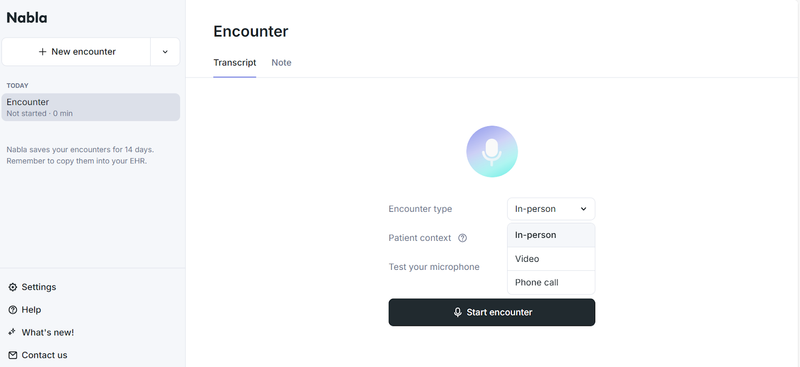
Nabla helps busy clinics manage large patient volumes and heavy documentation efficiently. It captures visits in real time and generates structured notes automatically, keeping charting fast and accurate for clinics using enterprise EHR systems like Epic, AthenaHealth, and NextGen.
Notes are created during visits, reducing manual entry and ensuring consistency even on the busiest days. AI-powered templates adapt to different specialties and patient types, while all documentation follows HIPAA standards to keep patient information secure.
Features & Pros:
Cons:
Capterra rating: N/A
Pricing: $119/month
Best fit: Large clinics needing reliable, fast note-taking with structured templates and coding support

Innovaccer InScribe helps clinics using enterprise EHR systems like Epic, AthenaHealth, and Oracle Cerner streamline documentation. It captures conversations in real time and converts them into structured notes automatically, allowing providers to focus on patient care.
Notes are generated during visits, keeping charts consistent across providers and departments. AI support suggests assessments based on exams and patient history, aiding in complex cases. All records are HIPAA-compliant, ensuring secure documentation across large clinical teams.
Features & Pros:
Cons:
Capterra rating: 5/5
Pricing: $1.20 per note
Best fit: Large teams needing real-time AI note-taking integrated with enterprise-level EHRs.

Augmedix helps clinics maintain hands-free documentation during patient visits. Providers wear a device that captures exams and conversations, while AI generates a first draft of SOAP or A&P notes.
A human scribe reviews and refines the notes before they are pushed directly into the EHR. This approach allows clinicians to focus fully on patients without typing, while all records remain HIPAA-compliant and securely handled. The system works well for providers moving between rooms or managing multiple shifts.
Features & Pros:
Cons:
Capterra rating: N/A
Pricing: Quote-based
Best fit: Clinics where providers need fast, hands-free documentation without interruptions.

Twofold helps clinics generate highly accurate notes while supporting coding needs. Visits are captured in real time, producing drafts that require minimal edits.
The system is particularly useful for clinics with frequent billing or complex coding, reducing back-and-forth after documentation. Notes are automatically created, allowing providers to review and finalize them quickly, keeping workflows smooth and efficient. All records remain HIPAA-compliant and secure, with AI-driven coding suggestions to minimize errors and missed charges.
Features & Pros:
Cons:
Capterra rating: N/A
Pricing: $49/month
Best fit: Clinics that prioritize high accuracy and strong coding support.

Heidi helps specialty clinics create detailed, structured notes quickly. During visits, providers speak naturally, and Heidi converts conversations into complete SOAP or A&P notes in real time.
Clinics with complex assessments benefit from precise control over templates and formats. Notes are built automatically, allowing providers to focus on patients instead of charting. All records remain HIPAA-compliant and encrypted, with added features like signed receipts for secure documentation.
Features & Pros:
Cons:
Capterra rating: N/A
Pricing: $799/month
Best fit: Specialty clinics requiring detailed documentation and customizable templates
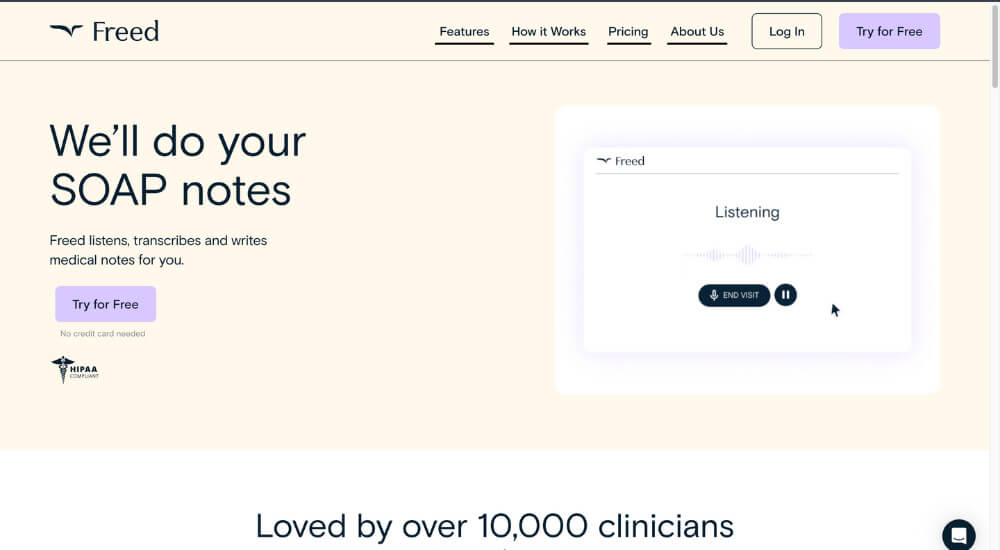
Freed AI helps independent providers and small practices generate structured clinical notes without complex setup. During visits, the tool listens in the background and converts conversations into organized SOAP notes automatically.
The platform focuses on simplicity, allowing clinicians to review and finalize drafts quickly. Notes can be copied into most EHR systems, making it suitable for providers who want AI support without switching their existing software. All documentation is stored securely with HIPAA-compliant safeguards in place.
Features & Pros:
Cons:
Capterra rating: 4.9/5
Pricing: ~$99/month
Best fit: Independent providers and small practices wanting simple, ambient AI documentation without complicated onboarding
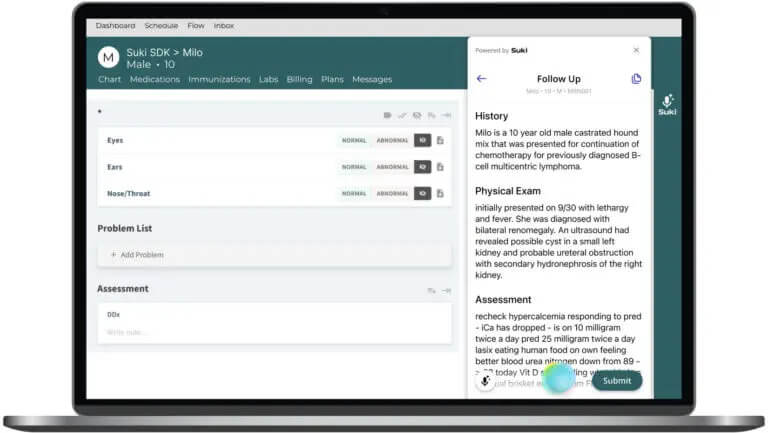
Suki AI supports large health systems and multi-provider clinics with advanced voice-enabled documentation. Providers can speak naturally during visits, and Suki generates structured notes while also assisting with coding and EHR navigation.
The platform integrates directly with major enterprise EHR systems, reducing duplicate entry and supporting high patient volumes. Designed for scale, Suki combines AI voice recognition with workflow automation to streamline documentation across departments while maintaining HIPAA-compliant security standards.
Features & Pros:
Cons:
Capterra rating: 4.4/5
Pricing: Quote-based
Best fit: Large clinics and health systems needing enterprise-level voice documentation and deep EHR integration
AI scribes help you save time, stay consistent, and keep your documentation manageable during busy days. Here are the key benefits in a simple, practical list.
Here’s a list of top tools and the settings they’re designed to support.
Bonus Read: What’s the Smartest Way to Customize and Summarize Intake Forms?
Choosing the right AI scribe comes down to how well it fits into your day and how much work it removes from your charting. The best tools support your workflow without adding extra steps or slowing you down. Here are the criteria that matter most.
Choosing the right AI medical scribe is not just about faster notes. It directly affects how smoothly your clinic runs each day. The right tool should reduce after-hours charting, improve documentation accuracy, and connect naturally with your EHR, billing, and scheduling workflows.
When your documentation system supports your routine instead of interrupting it, you spend less time fixing charts and more time focusing on patient care.
Every clinic operates differently. The best AI scribe is the one that aligns with your workflow, documentation style, and patient volume. When the system fits your daily rhythm, charting becomes part of your visit rather than extra work waiting until the end of the day.
In the end, the best choice is the one that feels right when you use it. Try the free trials, see which workflow fits your clinic, and pick the tool that makes your day feel easier.

Tags
Nick Gabriele, Director, Noterro, has been leading the company to greater heights since May 2012. With his vision and 10+ years of expertise, Noterro has become a leading practice management software that offers users an innovative platform for storing notes, tracking appointments, and managing their practice.
Noterro was born out of the need to create a more efficient way to manage paper charts at Ontario College of Health and Technology, which Nick owned.
For nine years, he has performed Independent Medical Evaluations, which allowed him to sharpen his skills in assessing and providing solutions to various health-related issues. With a strong background in rehabilitation settings, including Chiropractic, Physiotherapy, and Massage Therapy, Nick has also garnered a wealth of experience in his field.
Furthermore, Nick has a knack for passion and proficiency in education that has also led him to work in private education for over 20 years. This invaluable experience has enabled him to develop a deeper understanding of how to deliver top-notch training and support to individuals and organizations alike.
In addition to his professional achievements, Nick is an active speaker and has participated in several webinars and podcasts on topics related to electronic record-keeping and practice management. He also has written a plethora of leadership articles on tech topics, including "Charting in the electronic age," "How to Leverage Practice Management Software." His work has been featured in top industry publications, such as Hamilton News. Nick’s insights also have been cited in notable Podcasts like Business Blueprint and Practiciology.


.webp)
No credit card required. Available 1-on-1 support.
.webp)
No credit card required. Available 1-on-1 support.
.webp)
.webp)



.webp)