No items found.
Free Webinar · May 7 · How to Get (and Keep) More Patients as a Practitioner →
Save Your Spot

Table of Contents

Experience Better Practice Management Today!
Starting at $28.05/month
No Credit Card Required
Experience Better Practice Management Today!
Starting at $30/month
No Credit Card Required
Starting a mobile osteopathy clinic can be a rewarding way to combine hands-on care with a more flexible business model. I have seen strong demand for home-based care from seniors, new mothers, post-surgical patients, and busy professionals who want treatment that fits their lives more easily.
That growing demand is one reason mobile care keeps getting more attention. It is also backed by strong cost-benefit, with research showing that mobile clinics can save about $36 in overall healthcare costs for every $1 invested.
In this guide, I’ll walk you through the practical steps to launch your mobile osteopathy practice well.
A mobile clinic can be fully mobile or sit alongside a private practice. The better model depends on your schedule, your finances, and the kind of patient experience you want to deliver.
If you are starting from scratch, a fully mobile clinic can keep overhead lower and help you start faster. You avoid rent, front-desk costs, and the pressure of filling a treatment room from day one. If you already have clinic access, a hybrid model often provides greater stability, as you can maintain clinic revenue while testing house call demand.
I have seen many practitioners do well by starting with one or two mobile days each week. That gives you room to learn how travel, notes, and patient communication actually feel in practice before you commit fully.
The home-visit experience should feel calm, private, punctual, and organized. Patients should feel that your mobile clinic is every bit as professional as a fixed-site private practice. That impression comes from the efficiency of your timing, setup, communication, and how smoothly the visit moves from arrival to follow-up.
A mobile clinic gets easier to market when the offer is clear. Patients respond faster when they can tell who you help, where you travel, and why your service fits their life better than a standard clinic visit.
Do not start by trying to help everyone. Instead, start with the patient groups who are most likely to value home visits enough to pay for them. In most cases, that means choosing patients with a clear reason to avoid clinic travel. Good early niches for a mobile clinic often include:
To choose your niche, look at three things:
If a niche gives you clearer messaging, easier referrals, and repeat visits, it is usually a strong one.
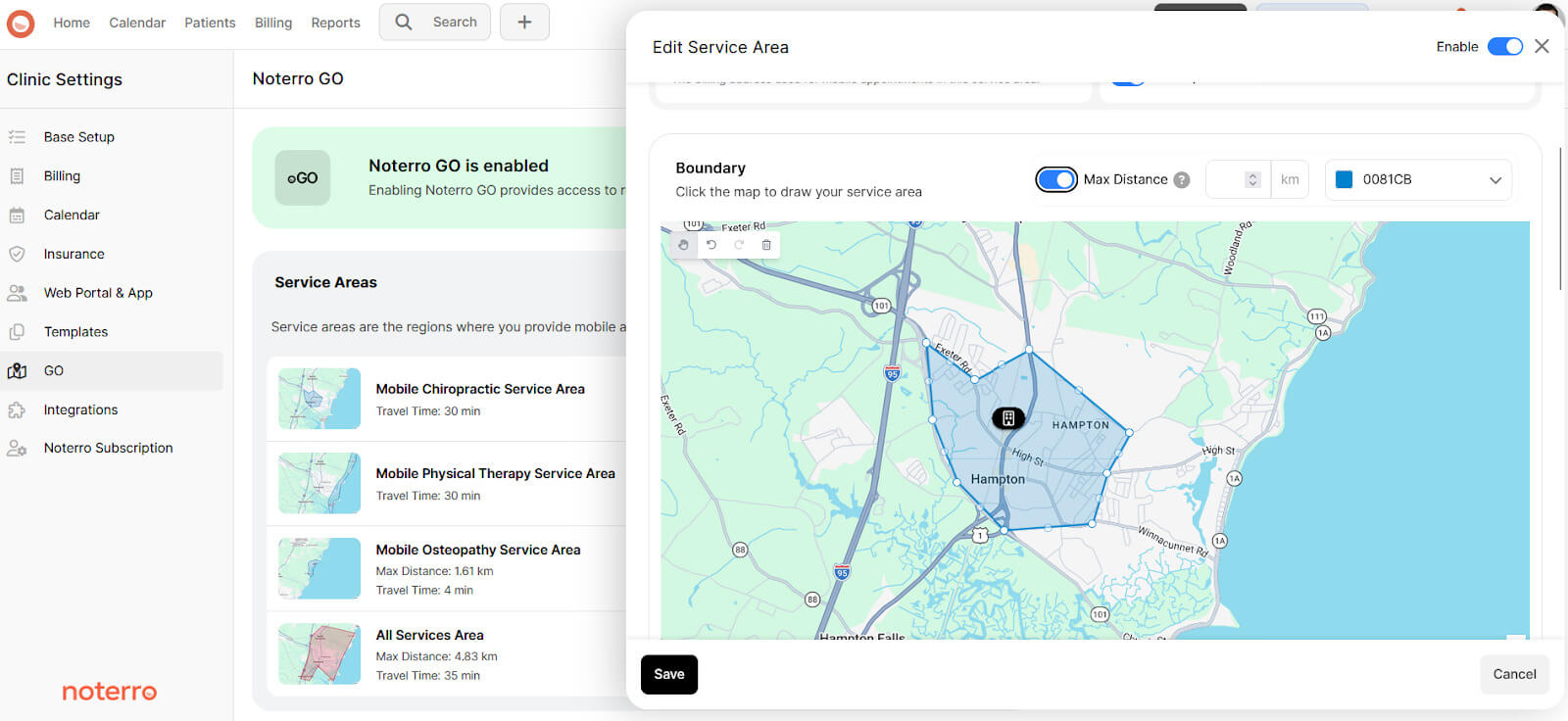
Pick a service area based on time, not distance alone. Ten miles in one area may take fifteen minutes. In another, it may take forty-five.
I would start with a radius you can cover in about twenty to twenty-five minutes between visits. Then group nearby neighborhoods into one zone and keep your first route days tight. A mobile clinic becomes much easier to manage when you avoid long gaps and backtracking.

A mobile clinic should answer a real local need. Before you launch, you need a practical sense of who is likely to book, what local practitioners already offer, and where the service gaps still sit.
Start with two or three patient groups who would have a clear reason to prefer home visits. That could include seniors, new mothers, busy professionals, or post-surgical patients. Then look at the areas you want to serve and ask whether those groups are actually there in enough numbers to support a mobile clinic.
You can also check local Facebook groups, neighborhood forums, and community pages. If people are already asking about home-based care, easier appointment access, or practitioner recommendations nearby, that is a useful sign.
Search the same terms online a patient would use, such as “mobile osteopath near me,” “osteopath home visits,” “osteopathy at home in your city,” or “in-home osteopath in your area.”
Then review the first page of results, clinic websites, Google Business Profiles, and patient reviews. As you go through them, focus on a few practical points:
This step is about understanding how they present the service and whether patients still face friction.
The gap may be that no one clearly offers home visits. In some areas, the service may exist, but the booking process feels unclear, the service area is limited, or patients mention issues like poor communication, long waits, parking trouble, or difficulty getting to the clinic.
If you can see what local options already do well and where the patient experience still falls short, it becomes much easier to position your mobile clinic in a way that feels relevant and needed.
A mobile clinic needs a business plan built around the real shape of travel-based care. If you only price treatment time and ignore driving, setup, and cancellations, the numbers can mislead you quickly.
Start by separating one-time costs from monthly costs. That makes it easier to see what you need to launch and what the business needs to carry every month.
Your one-time startup costs may include
Your monthly operating costs may include:
Do not build your budget from rough guesses. Price out each item, then add a buffer for replacements, supply top-ups, and small costs that show up once you start working.
Before you set pricing, work out what a full route day can realistically hold. Look at how many visits you can do without rushing, how long each visit takes, how much time goes to driving and setup, how many route days you want each week, and what your fixed monthly costs are.
Once that is clear, calculate the minimum your mobile clinic needs to bring in each week just to cover costs. Then check whether your draft pricing actually supports that number. A fee may look reasonable at first, but once travel and setup are factored in, it may stop making sense.
Once you have worked out what your mobile clinic needs to earn each week just to cover costs, you can set pricing that does not undervalue your services. I would treat that number as your pricing floor, because it shows whether your rates can actually support travel, setup time, and limited daily capacity without quietly shrinking your margin.
Your pricing should be easy to explain without a long conversation. If you serve a small, tight area, a flat mobile rate often works well because patients know the price before they book. If your service area is wider and travel times vary a lot, zone-based pricing usually makes more sense because it reflects the real cost of getting to different neighborhoods.
Single visits can help patients get started, but they can leave your schedule uneven. If your patients usually need follow-up care or a short run of appointments, packages or memberships can make the care plan clearer and repeat bookings easier to manage.
That also gives you a better sense of what the next few weeks may look like, which matters in a mobile clinic. If you decide to structure care that way, Noterro can help keep the billing side organized with features like packages and memberships, payment processing, discounts, and more.
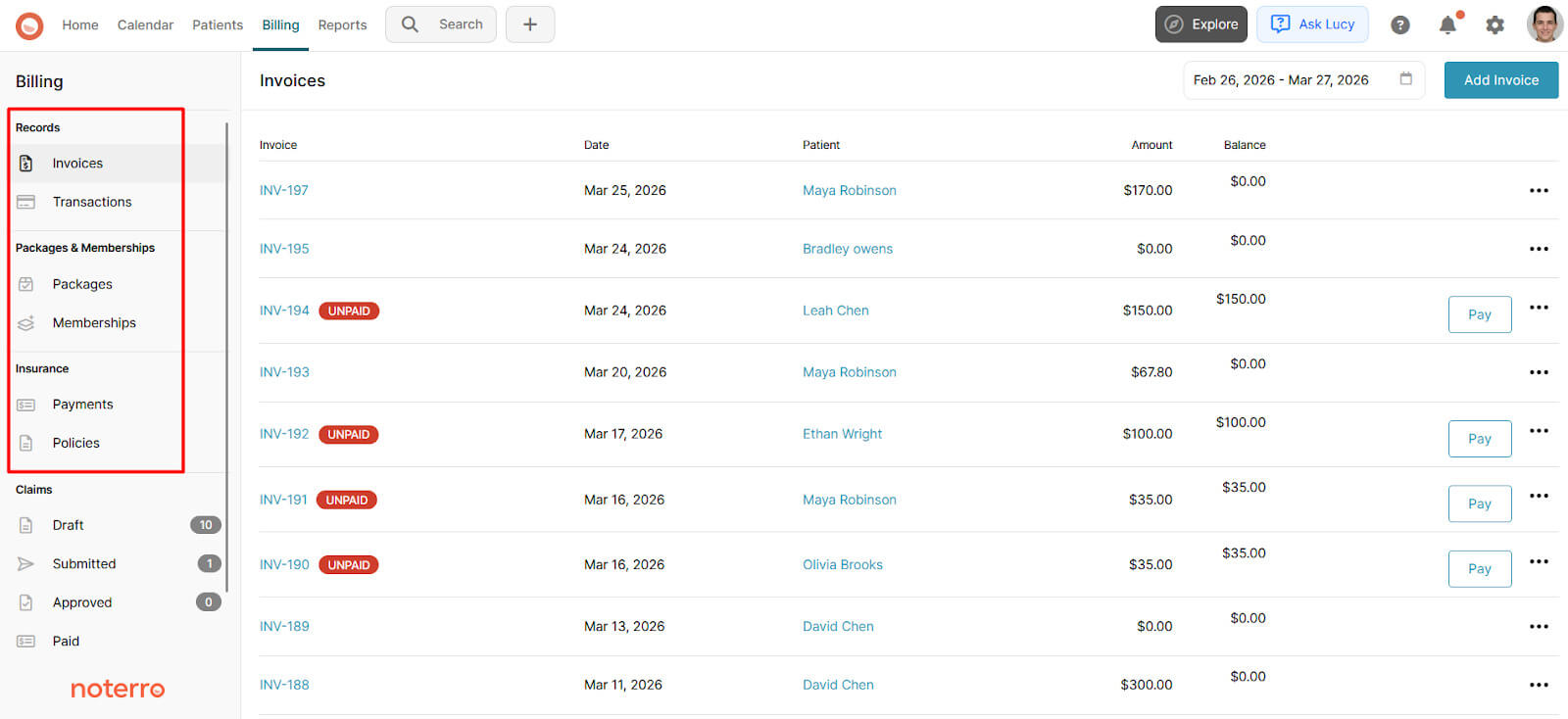
Patients should know when payment is due, how invoices and receipts are sent, and when a cancellation fee applies. I would keep those rules short, visible, and easy to understand, because mobile care leaves less room for vague expectations once travel time is already built into your day.
An osteopathy mobile clinic needs to meet the same professional standards as any serious osteopathy practice, with extra attention to the risks associated with working in different locations. You want the legal side clear before launch, not after your first month of bookings.
Before launching a mobile clinic, I would check your state's licensure requirements, since the rules can vary quite a bit. Start with a state-by-state licensure guide to review board details, fees, renewal rules, training requirements, and application steps. Then go straight to your state medical or osteopathic board website and confirm the latest instructions there.
Licensure is handled at the state level, so you need to verify the exact rules that apply where you plan to practice. Once that is clear, confirm your business registration, tax setup, consent forms, and recordkeeping requirements before you start taking bookings.
Professional liability insurance matters even more when you treat patients outside a fixed clinic setting. Before you launch, I would suggest you ask your insurer to confirm in writing that your policy covers home visits and treatment delivered in patient homes.
It also helps to check whether your coverage has any limits tied to location, travel, or the type of care you provide. A mobile clinic puts you in different environments each week, so this is not something I would leave to assumption.
Your vehicle is part of how an osteopathy mobile clinic works every day, so it needs to support the job without adding friction. In most cases, a reliable personal vehicle is enough. What matters more is whether it fits your treatment table, supplies, and daily setup without making every stop feel harder than it should.
I would think about this in practical terms.
Can you load and unload quickly?
Are your hygiene supplies, backup linens, and chargers easy to reach?
Does the vehicle feel dependable and comfortable enough for longer route days?
A mobile clinic runs more smoothly when your setup is easy to carry, easy to find, and easy to reset between visits. You do not need anything flashy, but a vehicle that feels reliable, keeps your equipment organized, and helps each route day feel manageable.
I would keep your kit limited to what you need for treatment, hygiene, and quick setup. For most mobile practitioners, that means a foldable treatment table, a portable stool, lightweight treatment tools, and a bag that keeps everything easy to reach.
Fresh linens, wipes, disposable face covers, hand hygiene supplies, and a few backup items should stay packed at all times. Those basics help each visit feel clean, organized, and consistent from one home to the next.
The setup routine should also stay the same at every stop. Confirm the address before leaving, review any key intake details, carry in only what you need, and reset the kit before driving away. That kind of consistency keeps the day easier to manage and helps the patient experience feel more professional.
You can absolutely start as a solo practice. Still, that does not mean you should carry every task yourself forever.
From what I have seen, most mobile practitioners start by handling treatment, notes, scheduling, invoices, and basic marketing on their own. That usually works while bookings are still manageable and admin does not spill too far into the rest of the day.
Once reminders, follow-up, scheduling changes, and invoicing start cutting into treatment time, it makes sense to hand off a few specific tasks. The first support is often part-time admin help, a virtual assistant for reminders and inbox management, or bookkeeping support. I would hand off the tasks that repeat often, take up time, and do not need clinical judgment.
An osteopathy mobile clinic gets harder to manage when bookings, notes, billing, and follow-up are split across different tools. Noterro can handle the practice management side, including scheduling, charting, intake forms, reminders, billing, payments, and follow-up. It keeps the workflow tighter and makes it easier to stay consistent when you are moving between appointments.
But for mobile practitioners, a few details matter even more. So, Noterro GO adds tools that help during the route day itself:
Before you try to fill the calendar, set up the basics that help people find you and trust the service. A mobile clinic usually gets more from early marketing when the offer, service area, and booking path are already clear.
Your Google Business Profile should list your service area, mobile osteopathy clearly, booking link, phone number, and business hours. Your website should answer the questions most people have before booking:
Here’s what a mobile-friendly website looks like:
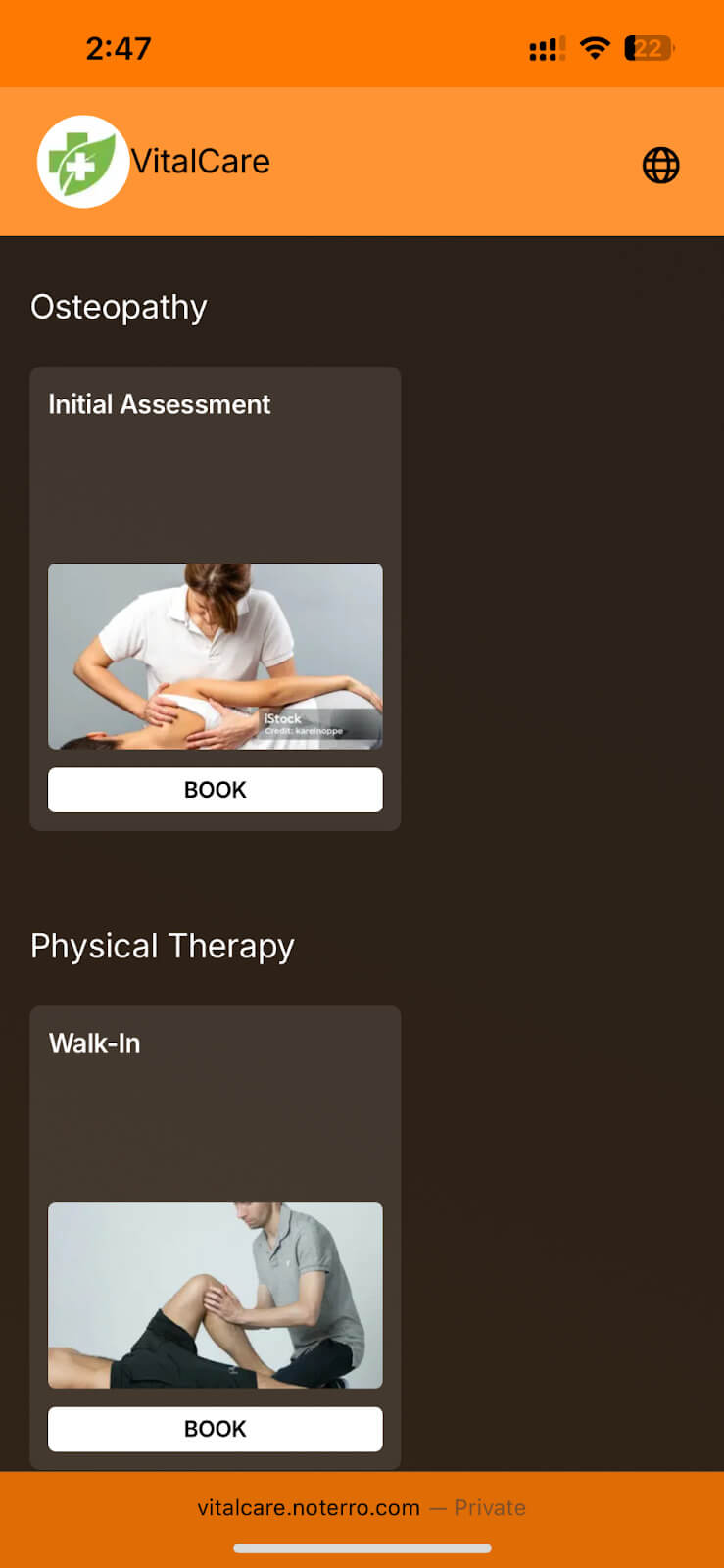
Keep the booking path short. If someone has to search for your service area or contact details, you will lose some of them.
Use social media to remove uncertainty. Show how you arrive, what you bring, how the setup works, and who mobile care suits best. Short posts about home visits, treatment routines, and common patient situations usually work better than broad promotional claims.
You do not need deep discounts to get started. A better approach is to offer something specific, such as:
That gives people a reason to book without training them to wait for lower prices.
Ask satisfied patients for reviews while the visit is still fresh. Then build local referral relationships with physiotherapists, chiropractors, massage therapists, fitness professionals, and nearby healthcare clinics. Referrals are easier to earn when people understand exactly who you treat, where you travel, and why your mobile clinic is useful.
Launching a mobile clinic is a big step, but it helps to keep the first phase controlled. I have seen this work better when practitioners treat the launch as a test period, not a final version they need to perfect right away.
Begin with one area instead of trying to cover your full service radius from day one. That gives you space to test scheduling, travel time, setup, patient communication, and follow-up without stretching the day too far. It also helps you spot what needs fixing before those small issues start repeating across a larger area.
Use those early visits to pay attention to:
Once the service feels more consistent, you can start opening up to a wider area or a broader mix of patients. That is also a better stage to push harder on local promotion, partnerships, and referrals. Expanding too early usually makes it harder to tell whether the problem is demand, pricing, or the workflow itself.
You do not need to track everything at once. Start with the numbers that tell you whether the model is becoming stronger:
Those numbers can tell you very quickly whether the mobile clinic is improving or just getting busier.
A mobile clinic can be a smart way to launch your osteopathy practice without taking on a permanent space right away. It can also help you reach patients who value convenience, privacy, and easier access to care.
What makes it work is the structure behind it. Clear positioning, realistic pricing, a manageable service area, and steady workflows will shape how sustainable the model feels. I would build those systems early, rather than trying to fix them once the schedule gets busy.
If you want the day to run with less friction, tools like Noterro and Noterro GO can also help support the operational side as you grow.

Tags
Ryan Barichello, Co-Founder of Noterro, is a dynamic leader with a vision for innovation and excellence in the tech industry. With both a Business and Computer Science diploma from Mohawk College, Ryan has honed his business and software development expertise.
His leadership and dedication have garnered him several prestigious awards, including the 2018 Fast 40 Hamilton issued by Hamilton Economic Development. He also received the 2015 Outstanding Small Business of the Year from the Stoney Creek Chamber of Commerce and the 2013 Hamilton Top 40 Under 40 from Business Link Media.
Beyond his professional achievements, Ryan is deeply involved in community initiatives. As a board member of Festitalia for 9 years, he actively promoted Italian culture and heritage in the community. He also has spent time volunteering as a mentor in Greater Hamilton Teaching Youth Entrepreneur Program (M.I.G.H.T.Y), nurturing the next generation of leaders.
With a keen eye for detail and a disciplined approach, Ryan tackles challenges with precision, ensuring that every project he undertakes is a resounding success. Ryan's strategic mindset and passion for entrepreneurship have been instrumental in propelling Noterro to the forefront of the industry.
Driven by a relentless pursuit of excellence, Ryan is passionate about technological innovation. His expertise in addressing complex challenges with precision, alongside his dedication to innovation, sets him apart as a leader in the technology field.


.webp)
No credit card required. Available 1-on-1 support.
.webp)
No credit card required. Available 1-on-1 support.
.webp)
.webp)



.webp)