No items found.
Free Webinar · May 7 · How to Get (and Keep) More Patients as a Practitioner →
Save Your Spot

Table of Contents

Experience Better Practice Management Today!
Starting at $28.05/month
No Credit Card Required
Experience Better Practice Management Today!
Starting at $30/month
No Credit Card Required
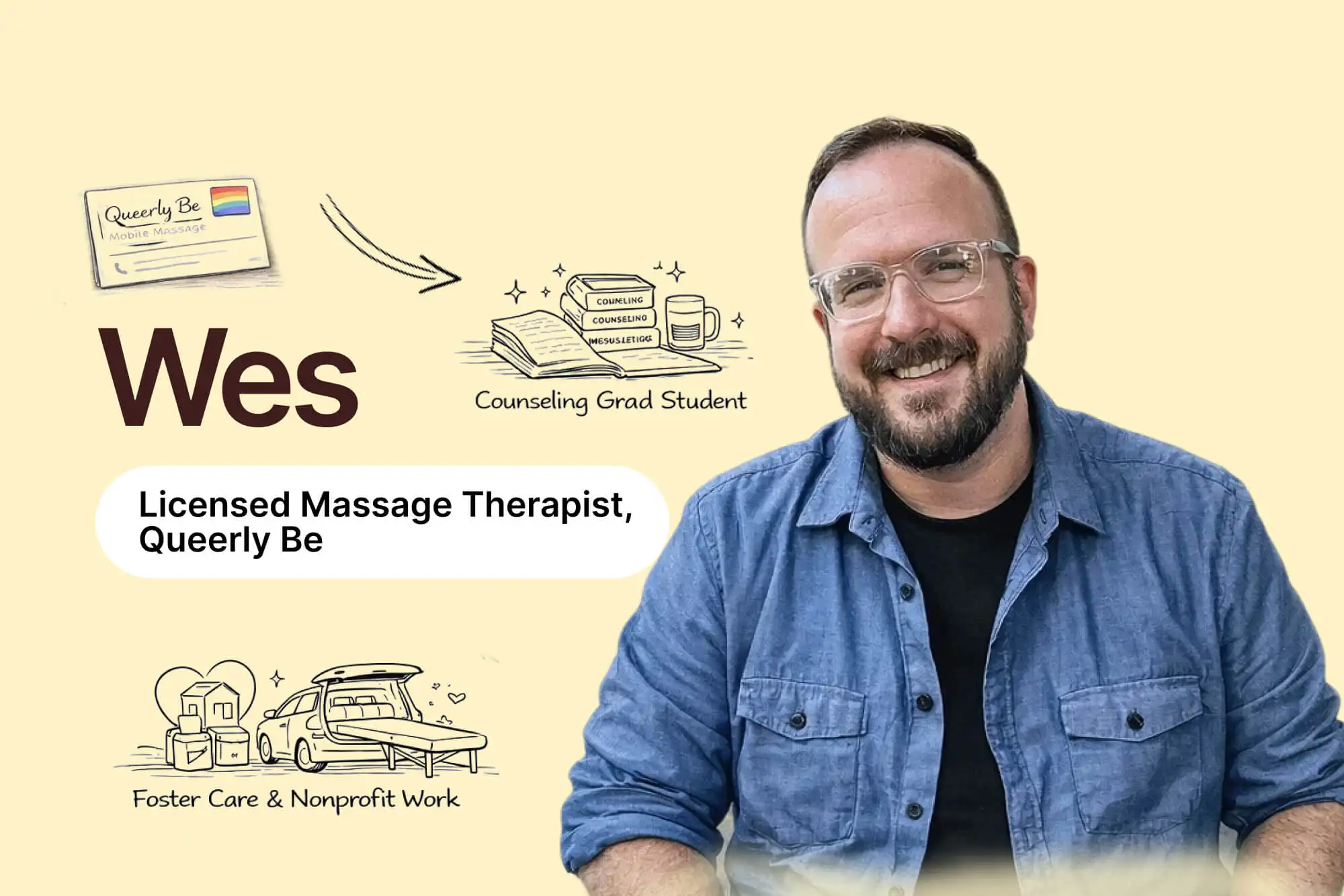
Wes is a Licensed Massage Therapist and graduate student in counseling based in Seattle, WA. He runs Queerly Be, a mobile-focused massage practice serving clients who want affirming, trauma-informed care. Before massage, he worked in nonprofits and foster care. He chose Noterro over Jane for its pricing structure, intuitive interface, and Noterro GO's mobile booking and safety features.
I came into massage later in life. After nonprofit work. After foster care. After learning how the body holds our experiences.
I'm currently in grad school for counseling, and through that work I kept learning more about how trauma lives in the body. At one point I realized: I need to go to massage school because I really want to work with people's bodies. It's a twofold thing. Getting to work with people's minds and getting to work with people's bodies.
Today, I run a mobile-focused massage practice in Seattle. My practice is still getting off the ground. But the foundation matters. And a big part of that foundation is creating space for people who don't always feel safe in traditional wellness settings.
The careers I had before massage didn't end because I wasn't passionate. They ended because the circumstances changed.
I worked for a nonprofit where the funding just wasn't there to keep me anymore. I had to leave. There was another job in foster care that I really enjoyed, but the leadership started to go in a direction I didn't ethically align with.
In many ways, those experiences pushed me toward grad school. And in grad school, I found massage. Because healing isn't just about the mind. It's about working with the body, too.
I'm queer myself. I came from an upbringing that was not affirming of that.
A big part of my getting into massage was also starting to experience massage myself. As a queer person navigating that history, massage became a very important part of reconciling my mental relationship with my body.
That experience shaped the kind of practitioner I want to be. I know what it feels like to walk into a space and wonder whether you'll be understood. I wanted to create something different.
For a lot of queer folks, especially non-binary and trans clients, finding a massage therapist is kind of a roulette.
You don't know if the practitioner is going to be aware of or informed about the realities that queer people, especially trans and non-binary people, are navigating. A lot of trans folks I work with have experienced comments about their body. Being misnamed. Misgendered. Things that don't lead to a positive healing experience.
These aren't political issues. They're clinical and emotional safety issues. When someone walks into a session already bracing themselves for something to go wrong, that affects the entire experience.
This community is underserved. I live in Seattle, which allows me to be more explicit in my messaging about who I serve. But the need exists everywhere.
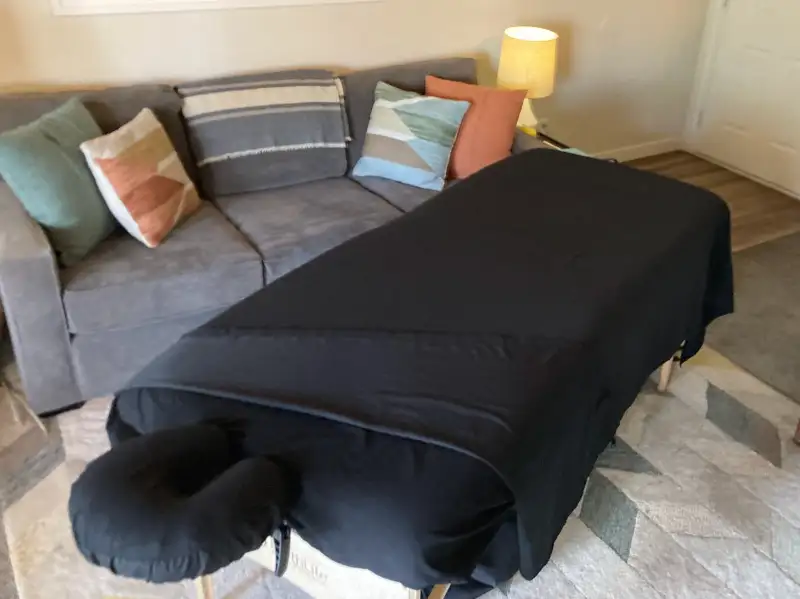
For a lot of queer folks, especially if they're also navigating disability or mobility realities, mobile care allows them to access treatment in their home that they wouldn't be able to access otherwise.
Clinics can feel uncertain. You don't know whether a space will feel safe until you're already there. Mobile massage solves that. Clients receive care where they already feel comfortable.
Anyone who wants to book is welcome. The branding is explicit about serving the LGBTQ+ community, but I work with anyone who resonates with the approach. Safety, consent, and affirming care aren't exclusive to any one group.
I looked at a handful of different options. Honestly, it came down to Jane or Noterro.
I've worked in a number of different massage clinics and studios and used a few different systems. The top two that came to mind were Noterro and Jane.
Cost was a big factor, especially when you're starting up. I still don't have a lot of money. But it wasn't just about price.
Jane felt so big. Noterro felt like the size I actually need. It gives me the features I want without feeling like I'm paying for stuff I don't need. The breakdown of the different price brackets aligned with what I needed and the budget I had.
I wanted people to be able to book online through my website. That was a big thing. Being able to have all my SOAP notes, intake forms, everything in one place. The forms part of Noterro was a big draw.
I also find Noterro fairly intuitive. I've worked with other systems, and this one doesn't require a lot of hand-holding to figure out.
The Noterro GO piece was one that looked interesting to me because I'm doing mobile massage.
I've worked with other platforms like Zeel where you check in on appointments. That's peace of mind. Knowing that if I'm not heard from for three or four hours, someone is going to check in and send somebody after me.
Noterro having a similar safety feature was important. Being able to pick my emergency contact. Knowing that if something feels off at a client's home, there's a system in place.
One of the biggest reasons I picked Noterro was that people could book mobile massages directly through my website. That integration mattered. I needed clients to be able to find me and book without friction.
My practice is still getting off the ground. I'm also in the internship phase of my graduate degree, which means my time is limited.
Marketing is mostly word of mouth. There's a queer youth camp here called Camp Ten Trees. I reached out and offered a free massage for anyone who volunteered at the camp. That's been a big way of getting the word out and connecting with the community that resonates with the brand.
Some of those people are getting massages for the first time. They've never experienced it before. Being their introduction to bodywork feels meaningful.
I have such a niche demographic that traditional marketing doesn't always apply. Finding the communities and groups where my message resonates has been more effective than broad advertising.
If you want to create a practice that's safer, more affirming, and more accessible, start with your values and build outward.
Choose tools that support the type of care you want to give. For me, that includes mobility, safety, and simplicity. Noterro has made that possible.
You don't need to serve everyone. You need to serve your people well. Find the communities where your message resonates. Build relationships there. Word of mouth from the right people is worth more than broad reach to the wrong audience.
And if you're queer yourself, or you've experienced what it feels like to walk into spaces wondering if you'll be understood, that experience is valuable. It shapes the kind of practitioner you can be. Use it.
Licensed Massage Therapist & Graduate Student in Counseling
Wes is a Licensed Massage Therapist and graduate student in counseling based in Seattle, WA. He runs Queerly Be, a mobile-focused massage practice serving clients who want affirming, trauma-informed care. Before massage, he worked in nonprofits and foster care. He chose Noterro over Jane for its pricing structure, intuitive interface, and Noterro GO's mobile booking and safety features.


.webp)
No credit card required. Available 1-on-1 support.
.webp)
No credit card required. Available 1-on-1 support.
.webp)
.webp)