No items found.
Free Webinar · May 7 · How to Get (and Keep) More Patients as a Practitioner →
Save Your Spot


Table of Contents

Experience Better Practice Management Today!
Starting at $28.05/month
No Credit Card Required
Experience Better Practice Management Today!
Starting at $30/month
No Credit Card Required
Most practitioners focus on improving their technical skills in care. That’s expected. You want strong outcomes and confident hands. But after working with clinics for years, I’ve noticed something consistent. Clients don’t just leave because of the results, but also because of how the experience made them feel.
Soft skills are often treated as secondary, but they have a direct impact on client retention, rebooking, and the stability of your schedule from month to month.
In this blog, I’ll walk through:
When soft skills are strong, clients are more likely to adhere to care plans. They rebook, they refer, and they trust you when progress is slow.
When soft skills are missing, the business feels shaky. You experience more cancellations, drop-offs, and instances of “ghosting” after the first or second visit.
The tricky part is that soft skills often feel invisible. You do not notice them until something goes wrong.
You might also like this: Why a Website Is No Longer Optional for Your Modern Medical Practice
Clients remember how they felt in your care. Sometimes, more than the exact technique you used. That emotional side matters, especially when a client is nervous, in pain, or unsure if treatment will help.
These strategies are designed to help you develop stronger client relationships, even in a busy clinic setting.
Trust often starts before treatment begins.
In a clinic, this might be the front desk. In mobile care, it’s how you enter the space and explain what will happen next.
A clear and relaxed first impression can lower anxiety. When clients feel settled early, they are more open and more likely to commit to care.
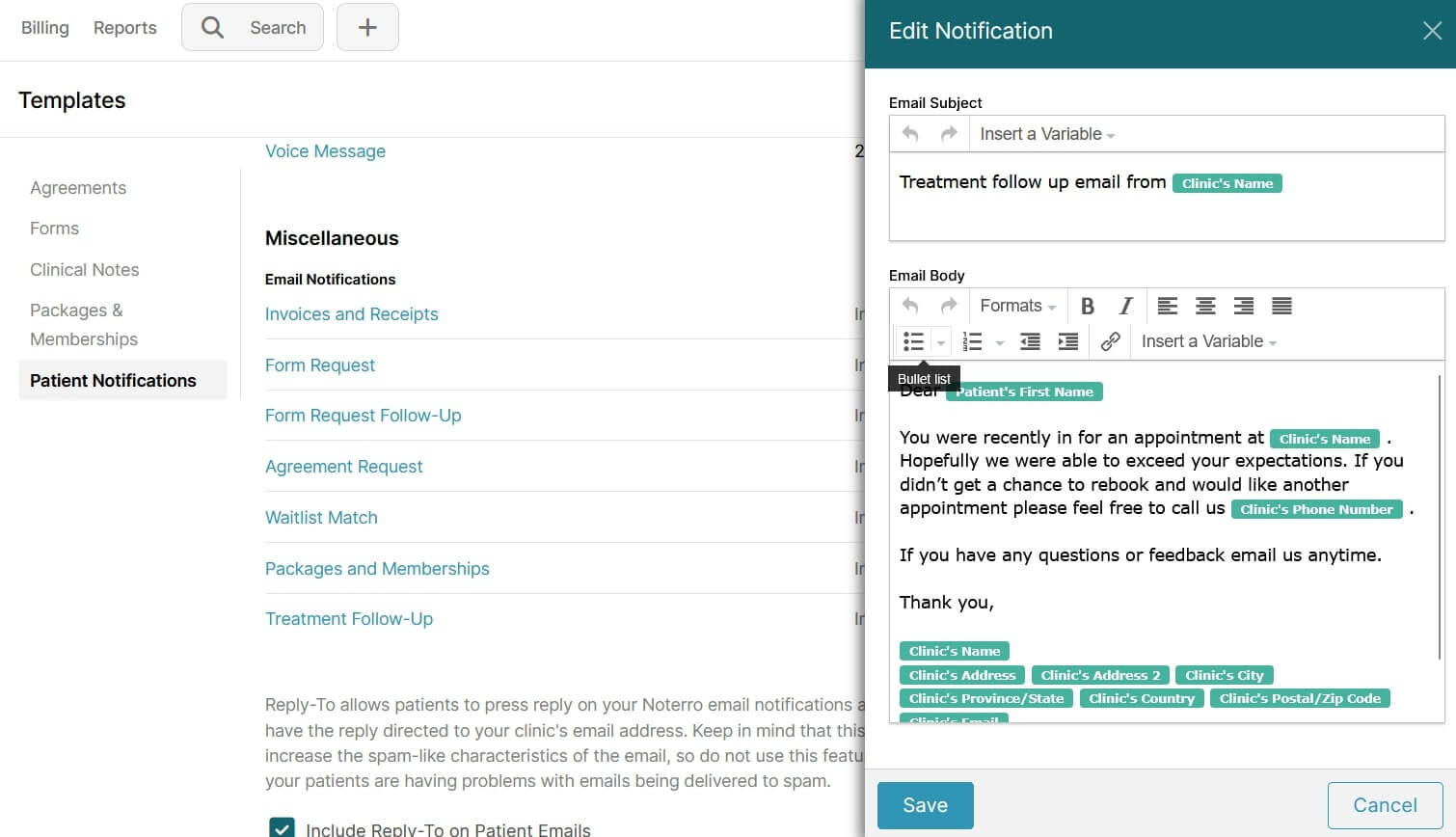
Follow-ups are one of the simplest yet often overlooked client retention techniques.
A missed visit doesn’t always mean a lack of interest. Life happens. When no one follows up, it becomes harder for the client to return without feeling awkward. A short check-in keeps the door open.
How Noterro helps:
Noterro helps by making follow-ups consistent without adding manual work. Appointment reminders are sent automatically by text, email, or phone, reducing missed visits without requiring you to remember or chase anyone.
When a client misses an appointment or has a challenging session, quick reminder notifications allow you to follow up promptly. You can customize the message so that it sounds natural and fits the situation, rather than feeling generic.
Over time, this consistency matters more than the exact wording. Regular, predictable communication keeps clients engaged and makes it easier for them to stay on track with care.
Personalization is not fancy. It is remembering the small details that make a client feel known.
How Noterro helps:
Noterro helps by putting that context in front of you at the right moment. Snapshots give you a quick view of the client and their history before you walk in, so you are not relying on memory or scrambling through notes. Patient history helps you spot patterns over time, not just isolated visits. Form Summary converts intake forms into a clear, natural-language overview, making it easier to prepare even on busy days.
This is where soft skills truly shine. A client can follow the plan and still feel unsure. I like simple active listening. No scripts. Just one strong question early on: “What’s your main worry today?”
It does two things. It helps you understand client concerns, and it builds trust fast.
Loyalty is built through small moments, not big speeches. A birthday message, a quick progress note like “You’re moving better than last time,” or a short check-in after a hard week always helps.
How Noterro helps:
Noterro helps make that consistency easier. Automated follow-up emails ensure those touchpoints do not get missed when things get busy. If you want to reconnect with clients who have drifted away, you can create simple re-engagement campaigns and send them through the Mailchimp integration.
When it makes sense to reward commitment, custom discounts can be applied directly, reinforcing positive habits without extra admin work.

Also read: How Specializing in Your Strengths Builds a Thriving Medical Practice
Soft skills are most effective when they are integrated into your process. That way, you do not have to “remember to remember.”
Clients disengage when they are unsure what comes next. Even when care is helping, uncertainty creates hesitation.
Before a client leaves, three things should always be clear:
When this is missing, clients start making decisions on their own. They delay booking. They skip a week. Then another. Eventually, momentum is gone.
Clear routines remove that uncertainty. Explaining the next step and booking it right away keeps the patients on the treatment plan. It also removes the mental load from the client. They do not have to decide later if they should return. The decision is already made.
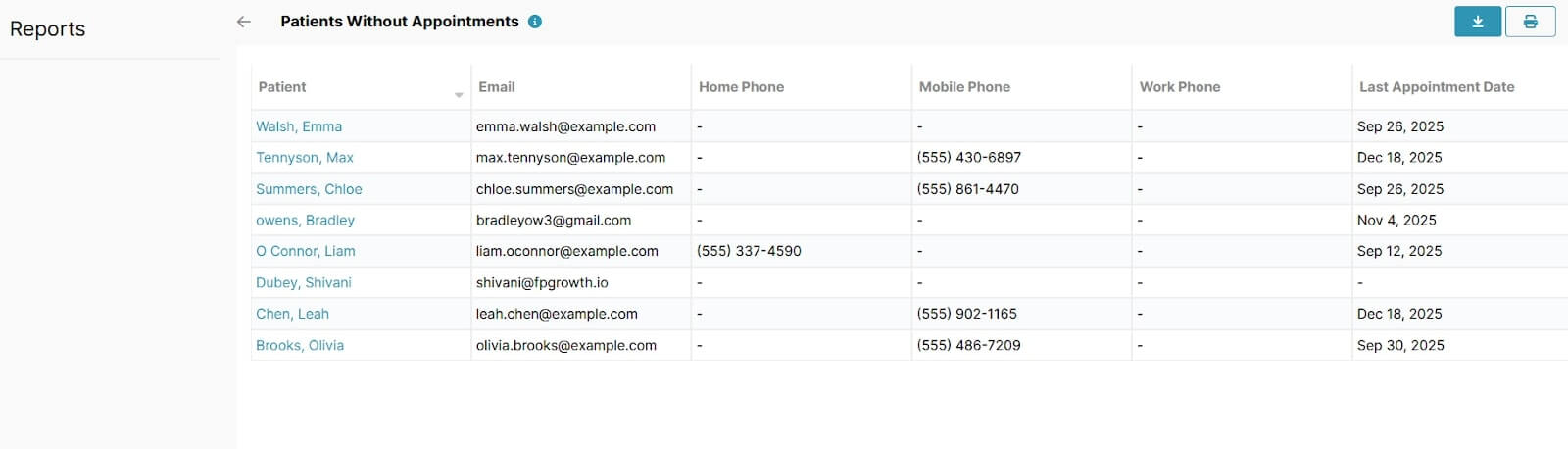
Drop-off almost never happens suddenly. It typically manifests in subtle, easy-to-miss changes.
Some of the most common early signals are:
Each of these, on its own, might not feel serious. Together, they usually point to disengagement. The problem is that many clinics notice these patterns too late. By the time a client has fully stopped booking, it feels awkward to reach out.
How Noterro helps:
Noterro’s reports make these patterns visible earlier. When you can see changes in attendance or booking behaviour, you have time to respond while the relationship is still active. Seeing patterns early gives you options. Waiting removes them.
Check-ins work best when they are routine, not reactive. They do not need to be long or emotional. They just need to happen consistently.
A few simple questions go a long way:
These questions do two things. They show that you are paying attention, and they surface issues before they turn into frustration. When clients feel comfortable sharing concerns early, they are far more likely to stay engaged with care.
As a clinic owner, you might find this helpful: Stop Patient Poaching: How to Protect Your Clinic From Ex-Staff
You do not need to overhaul your workflow to improve retention. Small changes, repeated often, are enough. Here are a few things you can apply right away:
None of this adds complexity; it reduces it. When expectations are clear and follow-up is consistent, clients stay engaged longer with minimal additional effort from you.
Interesting read: Avoid These 12 Mistakes: Proven Strategies to Grow Your Medical Practice
Soft skills drive retention. They help clients feel safe, understood, and supported. The problem is not knowing that, but staying consistent when the day gets busy. That’s where systems matter. Noterro helps you maintain the human aspects of care consistently, without adding more administrative work.
If you want to tighten up retention and make follow-through easier, start a 14-day trial and see how it feels when the system supports the relationship.

Tags
Ryan Barichello, Co-Founder of Noterro, is a dynamic leader with a vision for innovation and excellence in the tech industry. With both a Business and Computer Science diploma from Mohawk College, Ryan has honed his business and software development expertise.
His leadership and dedication have garnered him several prestigious awards, including the 2018 Fast 40 Hamilton issued by Hamilton Economic Development. He also received the 2015 Outstanding Small Business of the Year from the Stoney Creek Chamber of Commerce and the 2013 Hamilton Top 40 Under 40 from Business Link Media.
Beyond his professional achievements, Ryan is deeply involved in community initiatives. As a board member of Festitalia for 9 years, he actively promoted Italian culture and heritage in the community. He also has spent time volunteering as a mentor in Greater Hamilton Teaching Youth Entrepreneur Program (M.I.G.H.T.Y), nurturing the next generation of leaders.
With a keen eye for detail and a disciplined approach, Ryan tackles challenges with precision, ensuring that every project he undertakes is a resounding success. Ryan's strategic mindset and passion for entrepreneurship have been instrumental in propelling Noterro to the forefront of the industry.
Driven by a relentless pursuit of excellence, Ryan is passionate about technological innovation. His expertise in addressing complex challenges with precision, alongside his dedication to innovation, sets him apart as a leader in the technology field.
.webp)
No credit card required. Available 1-on-1 support.
.webp)


.webp)