No items found.
Free Webinar · May 7 · How to Get (and Keep) More Patients as a Practitioner →
Save Your Spot

Table of Contents

Experience Better Practice Management Today!
Starting at $28.05/month
No Credit Card Required
Experience Better Practice Management Today!
Starting at $30/month
No Credit Card Required
If you’re reading this, you’re likely thinking seriously about starting your own physical therapy practice. Clinically, you probably feel ready. What’s harder is the business side.
I’ve spent the last decade working with physical therapists who are opening clinics, buying practices, or fixing systems after launch. The pattern is consistent. When the business pieces aren’t clear, everything feels heavier.
In this guide, I’ll walk you through how to:
Let’s get into it.

This is the part most people rush through, and it’s usually where problems start. Owning a clinic is a role change. You’re still treating patients, but you’re also responsible for pricing, capacity, billing choices, compliance, and cash flow. If you don’t expect that shift, ownership can feel overwhelming fast.
When I talk to PTs about this step, I usually focus on three things.
This step isn’t about designing a clinic. It’s about deciding if ownership fits your life right now, and what level of responsibility you’re actually ready to carry.

Before you pick a location or buy equipment, you need to know who you’re treating and why they will choose you. Start with three lists:
Start with people, not services. Look at age ranges, occupations, and daily routines. Desk workers, athletes, older adults, post-op patients, and people dealing with long-term pain.
Then look at conditions, such as acute injuries, chronic pain, post-surgical rehab, workplace injuries, pediatrics, and geriatrics. Write down what actually shows up where you plan to practice.
When reviewing local markets, I suggest you look at competitors to answer a few simple questions:
Gaps are usually obvious once you look closely. Long wait times, confusing pricing, no clear specialty, or poor communication often signal unmet demand.
At the same time, you need to be honest about how people in your area expect to pay. Some markets support cash-based care without much friction. Others are heavily insurance-driven.
Most land somewhere in between. This isn’t a philosophical decision. It’s a local reality that shapes almost every decision that follows.
Most new clinic owners try to serve everyone at the start. I see this a lot. It feels safer when you’re worried about filling your schedule, but it usually makes marketing harder and daily decisions more complicated. When you try to speak to everyone, it’s harder for anyone to feel like you’re the right fit.
A niche doesn’t mean limiting yourself to one condition. It means being clear about a few things that guide how your clinic shows up:
That clarity shapes your messaging, referrals, and operations more than most people expect.
When the local demand supports it, these niches tend to work well:
Once you commit to a niche, decisions get easier. You know which equipment matters, your schedule becomes more predictable, your website is easier to write, and referral partners know when to send patients your way.
Instead of feeling like a grab bag of services, the clinic starts to feel focused. That focus is what makes growth feel sustainable instead of draining.
Also read: Why Use Appointment Scheduling Software for Physical Therapy Practice?

Once you’ve decided ownership makes sense, this is where you design how the clinic actually runs.
Your business model shapes two things more than anything else: your overhead and how your weeks feel. I’ve seen great clinicians burn out not because care was hard, but because the model they chose didn’t match how they wanted to work.
Here are the models I see work most often in PT.
Buying an existing clinic can give you patients and cash flow faster, but you also inherit existing systems, habits, and reputation. That can be a benefit or a burden.
Starting from scratch gives you full control over how the practice runs, but it requires patience and tighter financial planning in the early months.
Concierge or subscription-based models can create more predictable revenue and reduce insurance friction when the market supports it. Gym partnerships often lower rent and bring a built-in audience. Corporate onsite clinics reduce marketing needs, but you’re operating within someone else’s rules.
There’s no universally right choice here. The right model is the one that fits how you want your days to run, not just how you want the revenue to look on paper.
This is one of those steps where it pays to slow down and do it properly. It’s not exciting, but it sets the foundation for everything that comes after.
Most clinic owners end up choosing between a few common structures:
I’m not giving legal advice here, but I am speaking from experience. Guessing your way through this is a mistake. I’ve seen people try to fix structure issues later, and it’s almost always more expensive and more stressful than doing it right from the start.
Talk to an accountant and an attorney who understand healthcare businesses in your state, not just small businesses in general.
You’ll also want to confirm a few things early:
This step is boring. It’s also one of the easiest places to create problems you don’t see until much later. Getting it right means fewer surprises and more time to focus on patients once you open your doors.
This step quietly sets the tone for how stressful your clinic feels. I’ve seen clinics with strong demand struggle simply because payment expectations weren’t clear or because systems didn’t align with how they were being paid. Most clinics fall into one of three payment models.
This isn’t about preference. It’s about what your market supports and what you’re prepared to manage.
Also, before you open, write your policies down. You should be specific about:
Put this in plain English and repeat it at booking and intake. Clear expectations up front prevent hard conversations later.
If you’re insurance-based or hybrid, billing will take time. Decide early whether you’ll handle it in-house or outsource it. Avoiding that decision usually leads to delays and cash flow stress.
This is where having fewer systems helps. When scheduling, documentation, and payments live in different places, things fall through the cracks.
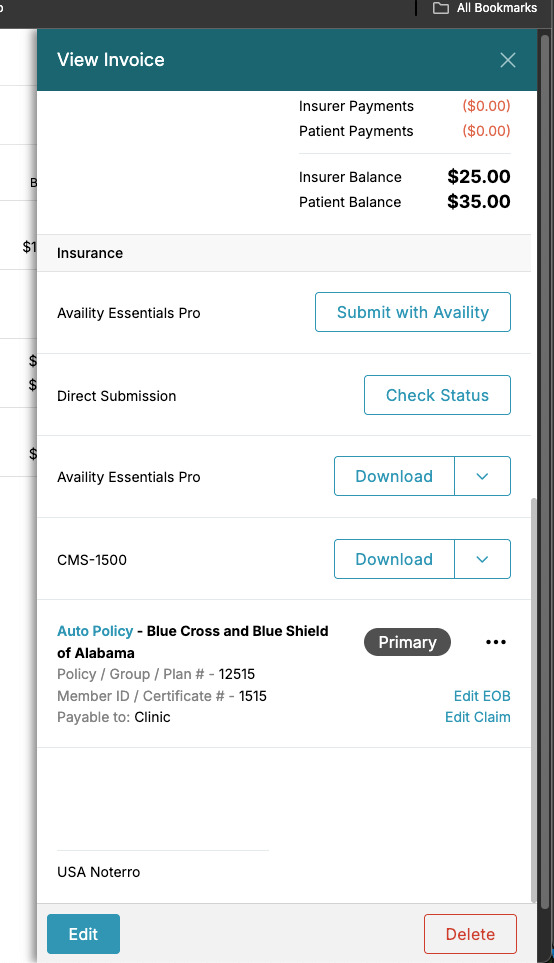
Clinics using Noterro often simplify this by keeping cash payments, insurance billing, and packages and memberships in one place.
In Canada, TELUS eClaims support helps keep insurance submissions close to daily workflows. In the US, Availity integration serves a similar role.
Check this out for your new clinic: 10 Best Physical Therapy Practice Management Software in 2026
If you plan to take insurance, start credentialing early. It almost always takes longer than people expect, and delays here can push back cash flow even if everything else is ready.
At a minimum, most clinics will need:
This part isn’t complicated, but it is procedural. Missing a single item can stall the entire process.
Even if you’re fully cash-based, documentation still matters. Clean, consistent SOAP notes support continuity of care and protect you if questions come up later. I’ve seen clinics regret treating documentation casually, even when insurance wasn’t involved.
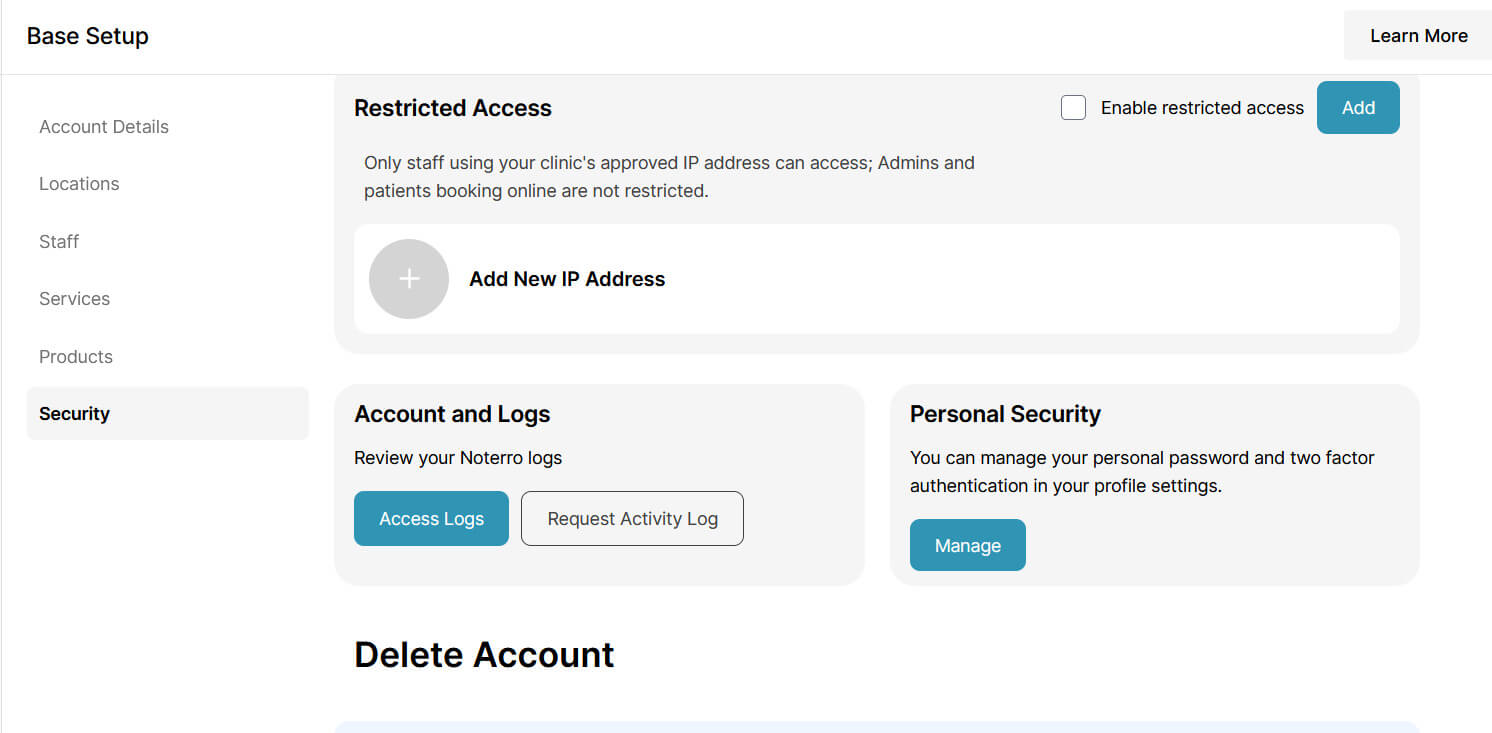
On the systems side, I like clinics to set basic security rules from day one. That means clear user access, strong passwords, and safeguards around patient data.
Platforms like Noterro support features, such as two-factor authentication, location restrictions, encryption, backups, and monitoring, which help keep compliance from becoming a constant worry as the clinic grows.
Getting this right early saves time and stress later, when you’d rather be focused on patients than paperwork.
You might also like: 9 AI SOAP Notes Software for Physical Therapists
This step is about clarity more than precision. A realistic plan gives you room to adjust in the first year, which almost always looks different from what was expected.
It helps to group expenses so you can see the full picture:
When everything is visible, it’s easier to plan without guessing.
Some costs stay the same month to month, while others move with volume:
Knowing the difference makes it easier to respond when things are slower or busier than expected.
Most clinics rely on some mix of savings, bank loans, or SBA-backed lending. In certain cases, investors make sense. Buying used equipment early can also reduce pressure without cutting corners.
The goal isn’t to build the biggest clinic right away. It’s about creating a setup that lets the practice grow steadily without forcing you into decisions that don’t feel right later.
Location isn’t just about foot traffic. It’s about access and referral gravity. I’ve seen clinics do well in modest spaces because they were easy to get to and close to the right partners.
When you’re evaluating spaces, I usually suggest looking for:
One question that matters more than most people think is how much space you actually need in year one. Paying for growth space too early is a common leak. It’s usually better to grow out of a space than struggle to fill one.
I always encourage owners to design their clinic around patient flow, not aesthetics. How people move through space affects both experience and efficiency. Think through:
Equipment is another area where new owners tend to overspend. Start with what your niche actually requires and delay the rest until demand proves it. A basic setup often includes treatment tables, bands, weights, and a few modality tools.
You don’t need a showroom on day one. You need a space that supports care and lets you operate without friction.
Hiring is a timing problem more than anything else. Hire too early and you burn cash. Hire too late, and you burn yourself out. I’ve seen both happen, often within the same first year.
Before you post a job, get clear on a few things:
Early hires matter more than most people expect. Skills can be taught, but reliability and fit are harder to fix later. The first few people you bring in set the tone for how the clinic runs day to day.
As soon as you add admin support, clean boundaries become important. You want people to help without giving away more access than necessary.
Physiotherapy clinic management systems like Noterro make this easier by offering assistant accounts with clear role-based permission controls.

That way, admin staff can handle scheduling or patient communication without seeing clinical details or sharing logins.
Clear roles, clear access, and clear expectations go a long way toward keeping the clinic organized as the team grows.
Also read: Strategies for Effective Utilization of Physiotherapy Billing Software
This is where I see clinics create a lot of avoidable friction. Things usually work fine at the start, then slowly fall apart as volume picks up.
When your workflow spans too many tools, you end up spending time reconciling rather than treating patients. Scheduling lives in one place, notes live somewhere else, billing is handled in another system, automated reminders come from a different tool, and marketing lists sit in a spreadsheet. It works for a while, until it doesn’t.
At a minimum, your core software should handle:

The goal isn’t fancy features. It’s fewer handoffs and fewer chances for things to slip through.
This is why I suggest using all-in-one systems early on. Noterro keeps scheduling, intake, charting, billing, and payments in one place. Online booking, calendar sync, and automated reminders by email, text, or call help reduce manual work. If you add providers or locations later, you’re not forced to rebuild your setup from scratch.
The simpler your systems are, the more time you get back to focus on care and the business decisions that actually matter.
Marketing gets strange when it’s treated like a one-time launch task. In reality, it’s an ongoing habit. The clinics that do well keep things simple and consistent, rather than chasing new tactics every few months.
Your website doesn’t need to be clever. It needs to be clear. At a minimum, make sure it communicates:
If someone can’t tell what you do or how to book in under a minute, they’ll move on.
Physician and community referrals still matter, but they only work when you’re easy to work with. Reply quickly. Make referrals simple. Send clear updates when it’s appropriate. Most importantly, be consistent. Referral partners notice patterns more than one-off gestures.
One of the most overlooked growth channels is the patients already in your care. Rebooking, clear treatment plans, and follow-through do more for long-term growth than most marketing campaigns.
This is where structure helps. Clinics using Noterro often use packages and memberships to support consistency and reduce drop-off.
For outreach, Mailchimp integration makes it easier to keep patient lists up to date and run basic campaigns without manual list management. You don’t need a complex marketing machine. You need clarity and follow-through.
The clinics that have calmer launches usually do a few unglamorous things before opening. None of it is exciting, but all of it matters.
Before you open, run through your core workflows the way a patient would. Starting from booking, then intake, documentation, billing, and follow-ups. This is where friction shows up. Fixing it early is much easier than fixing it while patients are waiting.
In the first 90 days, the goal isn’t perfection but visibility. You want to know what’s working, what’s lagging, and where pressure is building so you can adjust before problems compound.
Most patients don’t judge your clinic on branding. They judge it on how the visit felt:
When you get the basics right, you buy yourself time and trust. That’s what gives a new clinic room to grow without feeling chaotic.
You don’t need to do everything at once. What matters early is clarity around three things: your market, your niche, and your payment model.
Once those are set, build systems to support them. Systems touch every patient interaction, often in ways you don’t notice at first. When tools don’t talk to each other, admin grows, small errors add up, and burnout shows up sooner than most people expect.
That’s why many clinics choose an all-in-one system like Noterro early on. When scheduling, reminders, billing, and patient management live in one place, there’s less time spent chasing gaps and fixing work that shouldn’t have broken in the first place.
The goal isn’t to lock everything in forever. It’s to build a setup that feels manageable now and flexible later, so the practice can grow without slowly taking over your time and attention.

Tags
Nick Gabriele, Director, Noterro, has been leading the company to greater heights since May 2012. With his vision and 10+ years of expertise, Noterro has become a leading practice management software that offers users an innovative platform for storing notes, tracking appointments, and managing their practice.
Noterro was born out of the need to create a more efficient way to manage paper charts at Ontario College of Health and Technology, which Nick owned.
For nine years, he has performed Independent Medical Evaluations, which allowed him to sharpen his skills in assessing and providing solutions to various health-related issues. With a strong background in rehabilitation settings, including Chiropractic, Physiotherapy, and Massage Therapy, Nick has also garnered a wealth of experience in his field.
Furthermore, Nick has a knack for passion and proficiency in education that has also led him to work in private education for over 20 years. This invaluable experience has enabled him to develop a deeper understanding of how to deliver top-notch training and support to individuals and organizations alike.
In addition to his professional achievements, Nick is an active speaker and has participated in several webinars and podcasts on topics related to electronic record-keeping and practice management. He also has written a plethora of leadership articles on tech topics, including "Charting in the electronic age," "How to Leverage Practice Management Software." His work has been featured in top industry publications, such as Hamilton News. Nick’s insights also have been cited in notable Podcasts like Business Blueprint and Practiciology.


.webp)
No credit card required. Available 1-on-1 support.
.webp)
No credit card required. Available 1-on-1 support.
.webp)
.webp)



.webp)