How to Set Up and Manage Group Training Sessions with Ease

Group training sessions can change how you connect with patients. They build community, create new income streams, and help patients get more value from your care.
The real challenge isn’t teaching but setting things up in a way that doesn’t add more to your plate. Manual sign-ups, empty or overbooked classes, and chasing payments can quickly turn a good idea into more work.
After working with hundreds of practitioners, I’ve seen the significant impact that the right setup can have. So, here’s what we’ll discuss today:
- How group sessions strengthen relationships and grow revenue.
- What usually goes wrong and why many clinics struggle to keep classes running.
- Simple ways to set up and manage group training sessions and control attendance.
- Step-by-step instructions to add classes and get them on your calendar.
- Practical tips to keep sessions complete, organized, and stress-free.
Let’s start with how these group sessions benefit your practice.
How Can You Strengthen Practice with Group Training Sessions
Group sessions can do much more than fill your schedule. They bring people together, support patient progress, and give your clinic room to grow in simple, practical ways. Here’s how they help:
1. Build Stronger Patient Relationships
When people learn and recover together, they share progress, encouragement, and accountability. It transforms your clinic into a supportive community, rather than just a treatment space.
2.Add New Income Streams
Classes, workshops, boot camps, and seminars let you help more people at once. You earn more without taking extra one-on-one appointments or adding hours to your week.
3.Position Yourself as an Expert
Leading structured sessions demonstrates that you’re skilled in treatment and dedicated to teaching and guiding patients long-term. It strengthens trust and sets your clinic apart from the competition.
My personal anecdote:
A clinic where I worked started hosting small posture workshops once a month. Within six months, those classes became one of their biggest referral drivers. Patients invited friends and family, building trust and bringing in new patients who felt connected before their first visit.
What’s Stopping Most Clinics from Running Group Sessions?
The training sessions are great on paper, but clinics get stuck even before starting the program. The idea seems perfect initially, but logistics become a nightmare without a clear-cut system.
The overall trends that I observe through many such sources are:
- Manual booking causes mistakes. Sign-ups through paper lists or emails often result in double bookings, missed names, or ongoing corrections for patients.
- No capacity management causes hardship. Without a cap on the number of attendees, sessions are either overcrowded or go half-empty, which damages the experience and your income.
- It is challenging to monitor payments and attendance. Attempting to monitor who attended and who has paid tends to involve rummaging through several spreadsheets or reading messages from various staff members.
- Too many disparate tools make things sluggish. Moving between standalone sites for booking, payments, and reminders takes time, creates opportunities for errors, and slows down the business.
These dilemmas have the same outcome: you devote more time to controlling the process than leading the session.
How Does Noterro Make Group Sessions Easy
The group training session plan requires coordination, which is facilitated by the right system. Noterro does it all for you with its Classes feature so you can plan, schedule, and manage classes without tabbing between programs. Here's how it does:
1. Create Classes Fast
When you fill out the title, category, and session type, a new class takes a few minutes to create. Once saved, it is live on your calendar for patients to schedule. This arrangement organises all details, such as time, length, and description, for you and your patients.
2. Online Booking
Rather than emailing or calling, patients book online directly from your online booking page. It saves admin time, prevents double bookings, and frees up your staff members for other matters. Patients have instant confirmation when their spot is booked.
3. Participant Management
You have the option of setting the number of participants allowed per class. When full, new registrations automatically stop, as managed by the system. This keeps classes organised, prevents overcrowding, and enables you to provide a better experience for all participants.
4. Reminders and Invites
Automated email, SMS, and call reminder and invitation confirmations are sent to all attendees at the specified time. This eliminates no-shows and keeps your schedule on schedule. Reminders can even be customized for special details, such as what to expect or when to arrive.
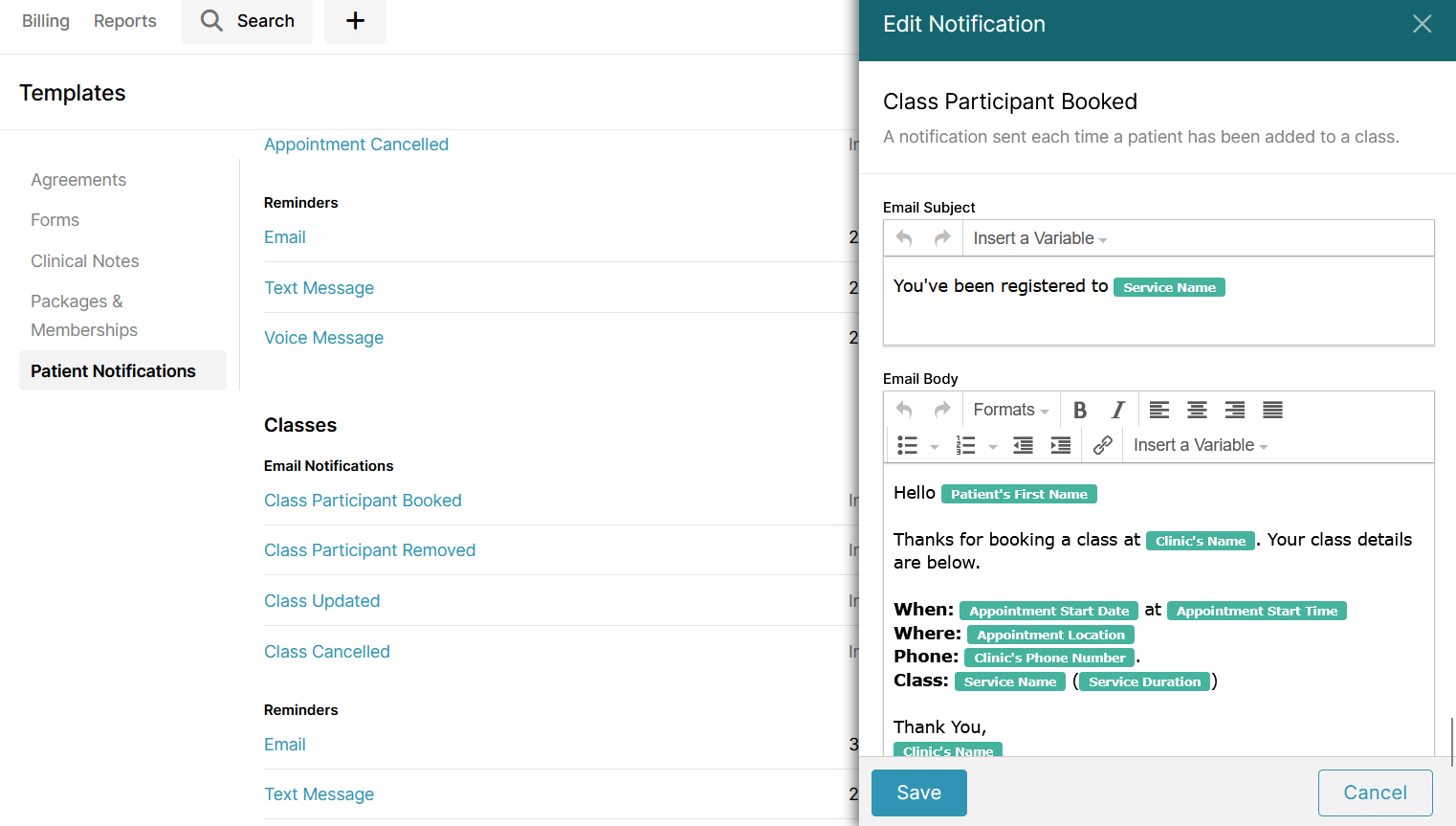
Here’s something chiropractors find helpful: How Chiropractors Can Reduce No-Shows with Effective Follow-Ups
5. Monitor Attendance
At the end of each session, you can note who was there and who was not. Attendance is automatically saved, allowing for easier tracking of trends in participation and planning subsequent sessions based on what is best for your patients.
6.Unified Billing
Payment, deposits, and memberships are all managed in a single location. Everything links directly to the class record, so at all times, you have a clear indication of which sessions have been prepaid. This eliminates data reconciliation between individual billing tools.
7.Team Access
Admins and staff can manage bookings, update student attendance, or make payments from their accounts. This means that anyone at the clinic can assist with scheduling and communication while ensuring that information is kept up-to-date and accurate.
These collectively eliminate the tedious effort of hosting group sessions with one streamlined system that is easy to use and quick to learn.
Also read: Top 8 Payment Processing Tools for Healthcare Clinics
How to Add a Class or Group Booking in Noterro
Setting up a class in Noterro takes only a few minutes. Once it’s created, you can easily add it to your calendar and start accepting bookings. Here’s how to do it:
Adding a New Class
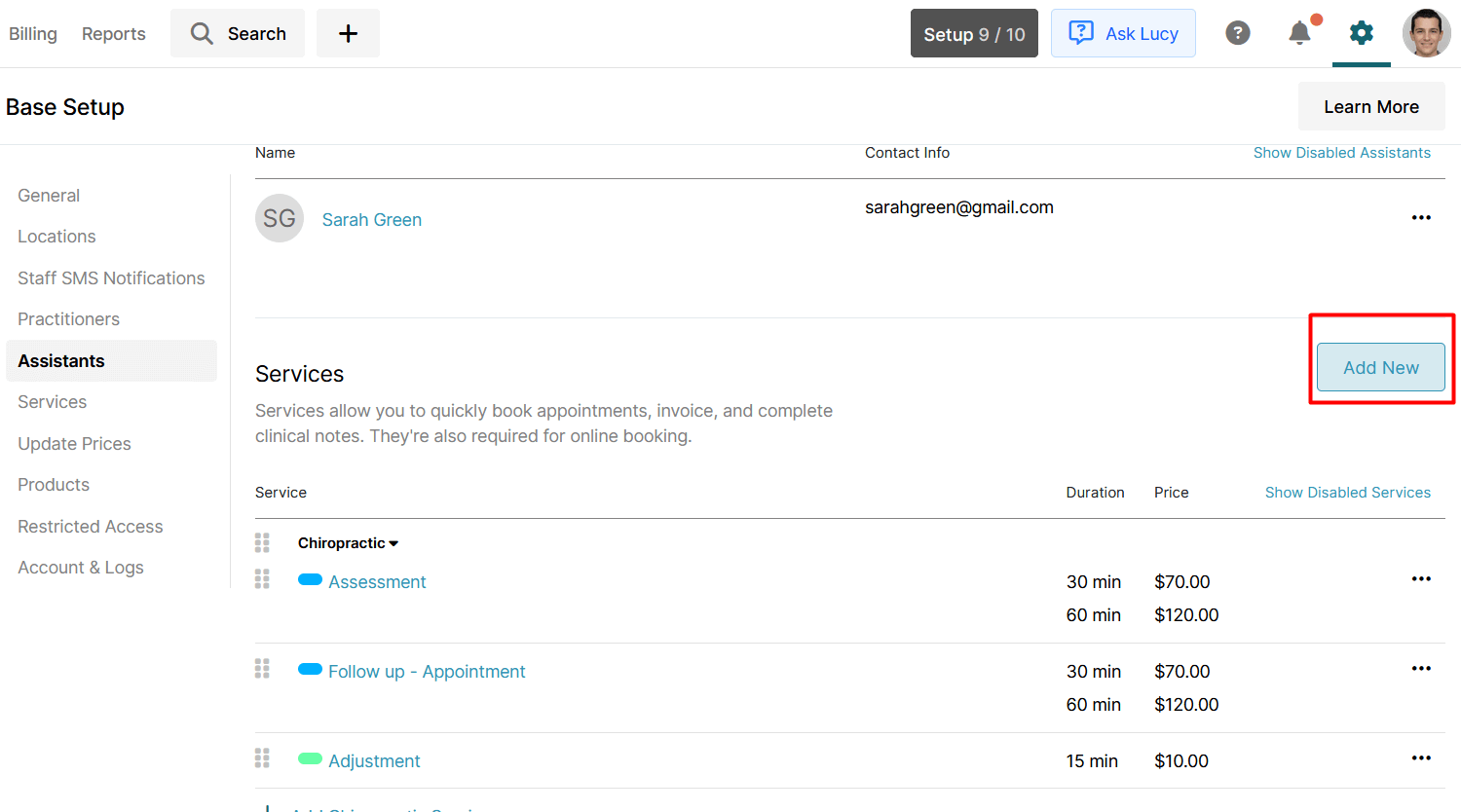
- Log in as the Admin and click on the Gear icon in the top right corner of your header. Go to Base Setup.

- Select Service and click Add New. You can now select an existing category or create a new one if necessary.
- Now, you have to choose a category. Enter the class name to add a new category for group sessions.
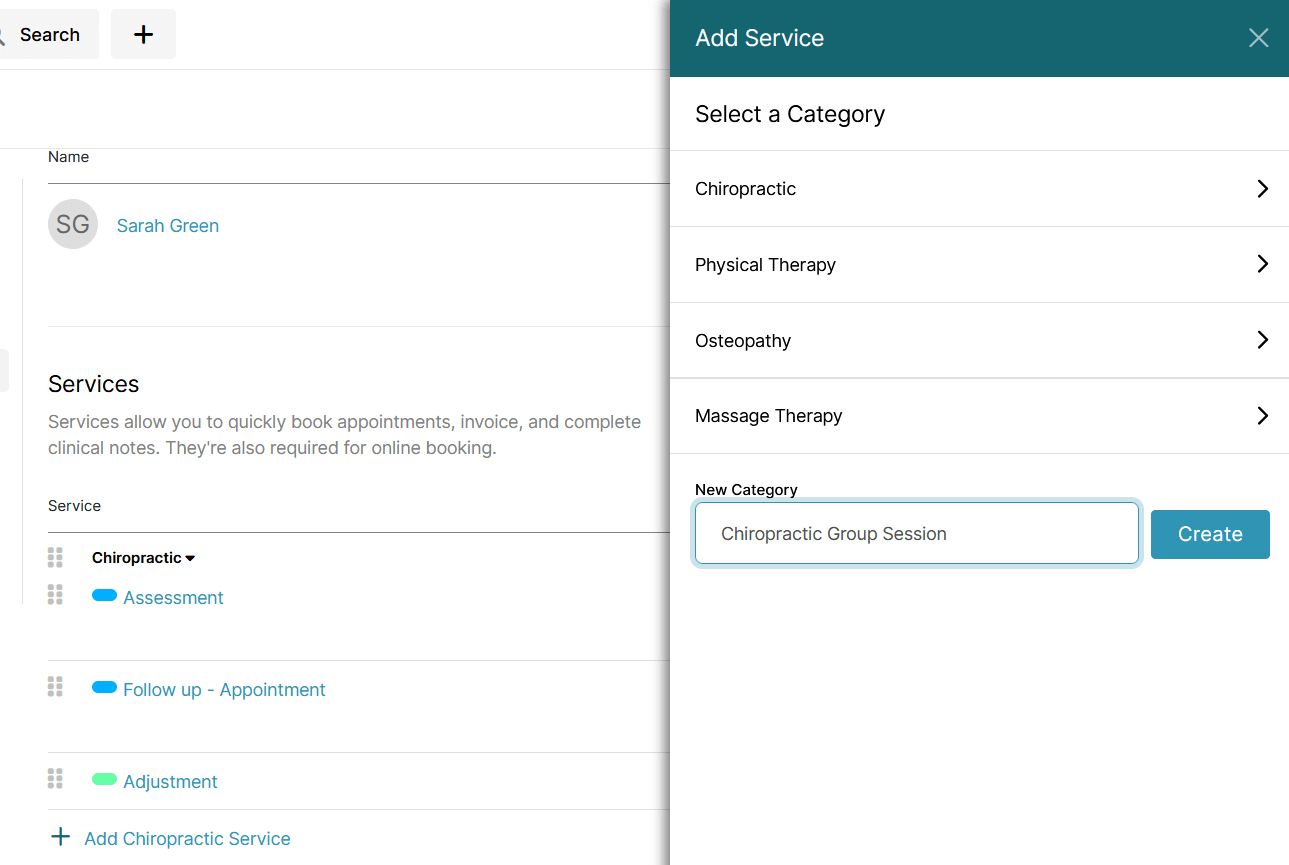
- Select the “Class/Group Booking” option to make it available for multiple participants.
- Add the maximum number of participants you’d like to allow.

- Add the maximum number of participants you’d like to allow.
- Fill out the remaining fields, including duration, price, and description, and then click Save.
Your new class is now ready to be scheduled. So, let’s see how to do that.
Adding a Class to the Calendar
Once a class is created under services, you can add it to a practitioner’s calendar so patients can book directly.
- Click on the Calendar.
- Select Class from the options at the top of the booking form.
- Choose the correct class from the Service dropdown.
- Fill in the remaining details, such as date, time, and practitioner, and click Add.
The class will now appear on your schedule and in your online booking system. Patients can register immediately, and all attendance and payments will be automatically tracked once the session begins.
What’s the Smartest Way to Run Group Sessions Smoothly?
Once your classes are established, some small routines can significantly impact how smoothly your training session plan runs. The ideal is for sessions to be organized, routine, and simple for you and your students. Here are some best practices:
- Set clear expectations: Ensure the patient understands what they are getting into before scheduling them. Identify specifics such as class size, schedule, and what students should arrive with. Explicitness of communication bolsters credibility and avoids last-minute misunderstandings.
- Automate reminders: Utilize reminders to confirm bookings, send session instructions in advance, and prevent no-shows. If patients regularly receive standardized updates, the turnout rate increases, and the time spent on manual follow-ups reduces.
- Plan for the future using attendance data: Having an overview of attendance over time enables you to discern which classes have the highest demand and which need revision. Based on that, fine-tune your schedule and provide more of what your patients appreciate. In Noterro, you can create a custom report in the ‘Report’ section to track Class no-shows.
- Balance your offerings: Not all sessions have to be the same theme or level of intensity. Create a schedule that includes a variety of lessons, such as workshops, recovery sessions, or brief group sessions, to keep patients engaged and returning for more.
Running group sessions consistently takes a bit of structure, but once you have the system in place, it is second nature. You'll know what works and what doesn't, and how to ensure that any class is well-organized and fully attended.
Conclusion: Simplifying Group Sessions
Group sessions are the simplest method for growing your clinic and reaching out to more patients at once. They increase retention, open up new revenue streams, and keep patients active in their care.
Clinics tend to be held back by the level of coordination involved. Following bookings, attendees, and payments all at once can be overwhelming. Noterro helps by putting everything into a single system so that you can run classes, follow participants, and have payments correct without introducing further admin time.
When things go smoothly, group sessions are less about logistics and more about providing patients with a regular experience that they crave.
FAQ
How can I attract more patients to book group sessions?

What’s the best way to schedule group sessions without overwhelming myself?
How do I handle cancellations or changes to group session bookings?
How do I avoid overbooking or under-booking group sessions?
Share