No items found.
Free Webinar · May 7 · How to Get (and Keep) More Patients as a Practitioner →
Save Your Spot


Table of Contents

Experience Better Practice Management Today!
Starting at $28.05/month
No Credit Card Required
Experience Better Practice Management Today!
Starting at $30/month
No Credit Card Required
As a chiropractor, your focus is on providing top-notch care, but to run a successful practice, you need more than just clinical skills. It takes solid compliance and malpractice protection.
The risks we face in our profession are often more subtle than we realize. Minor oversights can lead to serious legal and financial consequences; without proper protections in place, your practice remains vulnerable.
In this guide, I’m going to walk you through the essential aspects of malpractice coverage and compliance, including how to:
The goal here is to keep your clinic compliant while safeguarding your peace of mind and your business, so you can focus on what matters most: helping your patients. Let’s dive in.
It might seem obvious, but compliance and malpractice protection are the backbone of any successful practice. As a chiropractor, you must also protect yourself from legal and financial risks, in addition to providing care. Let’s break it down and take a closer look at why this protection matters.
We all know the risks, but understanding exactly how they manifest in day-to-day practice is crucial. Here are the main ones to watch out for:
Also read: 8 Must-Have Tools for Running a Modern Chiro Practice
Often, it’s the small things that snowball into big problems. Let’s look at a few common oversights that can leave you exposed to legal action:
You will also find this helpful: 8 Chiropractic Billing and Insurance Tips Every Clinic Should Follow
When it comes to malpractice insurance, many chiropractors don’t fully understand what they’re covered for, or better yet, what they’re not covered for. Having the right insurance can make all the difference, and in my experience, it’s worth taking the time to understand what’s included in your policy.
Here’s what you can generally expect from your malpractice insurance:
You’ll need to decide between two types of policies. Both come with their pros and cons:
Insurance companies look at a few key things when reviewing a claim:
There are a few key risks that most often lead to complaints or legal exposure for chiropractors. Here's a breakdown of the most common culprits:
Inadequate or unclear documentation is the number one cause of malpractice claims. If your SOAP notes are incomplete or vague, it makes defending yourself in court significantly more challenging. Always follow a standardized process for charting each session.

You need to use clear and consistent SOAP notes, keep track of treatment rationale, and monitor progress to ensure compliance.
You can use a digital SOAP note software like Noterro to ensure proper documentation. It also offers AI Scribe and Predictive Charting to make your note-taking more detailed and efficient.
You should never rely solely on verbal consent. If you’re changing treatment plans or trying new procedures, make sure the patient signs a consent form. Failing to do this opens you up to potential claims of unauthorized treatment.
Ensure you obtain written consent before any treatment and update your consent forms regularly. Also, always document refusals in case there’s ever a dispute about the treatment plan. You can use Noterro’s digital forms and create your own that fit your requirements.

If you treat patients outside your scope or fail to refer them to specialists when necessary, you’re setting yourself up for liability. It’s crucial to stay within your defined scope and document your decisions thoroughly.
Incorrect billing, missing documentation, and improper chiropractic codes are a huge risks for chiropractors. Not only can they trigger insurance audits, but they can also lead to claims or legal action. It’s essential to stay on top of your billing practices.
Related Read: How Medical Billing & Insurance Codes Can Impact Your Clinic’s Revenue
HIPAA (in the U.S.) and PIPEDA (in Canada) regulations exist for a reason. You must keep patient data secure and adhere to privacy rules to avoid costly fines or lawsuits. Ensuring your communication and record-keeping practices are secure is crucial.
The good news is, there are simple systems you can put in place to protect your practice. Here are a few steps I recommend:
Ensure all intake forms and consent forms are updated regularly. Have patients complete their forms digitally before their appointment for better accuracy and security.
How Noterro Helps: Noterro automates the entire intake and consent process. You can send patients their forms ahead of time, and they can complete them digitally. Once submitted, all forms are automatically stored in their patient chart. This system ensures you have everything documented before the patient even walks through the door.
Regular audits will help you identify and correct any mistakes before they become major issues. Make sure your SOAP notes and claims are always consistent and accurate.
How Noterro Helps: Noterro makes this process simpler with a structured SOAP template and predictive charting. These features help you identify inconsistencies or missing information early, ensuring your documentation is always complete. Plus, all your claims and billing records are organized in one easy-to-access place, so you can quickly review and make corrections as needed.
Related Read: 8 Best Chiropractic Billing Software for New Practices (2026 Update)
Effective communication is crucial in preventing misunderstandings. Document all patient conversations and maintain clear treatment plans.
How Noterro Helps: Noterro’s appointment reminders help reinforce treatment plans and ensure your patients stay informed about their care. Additionally, the Snapshot feature provides quick summaries of patient progress, making it easier for both you and the patient to remain in the same page and track progress over time.
Make sure everyone on your team understands compliance standards, from documentation to informed consent. This will help everyone stay aligned and reduce errors.
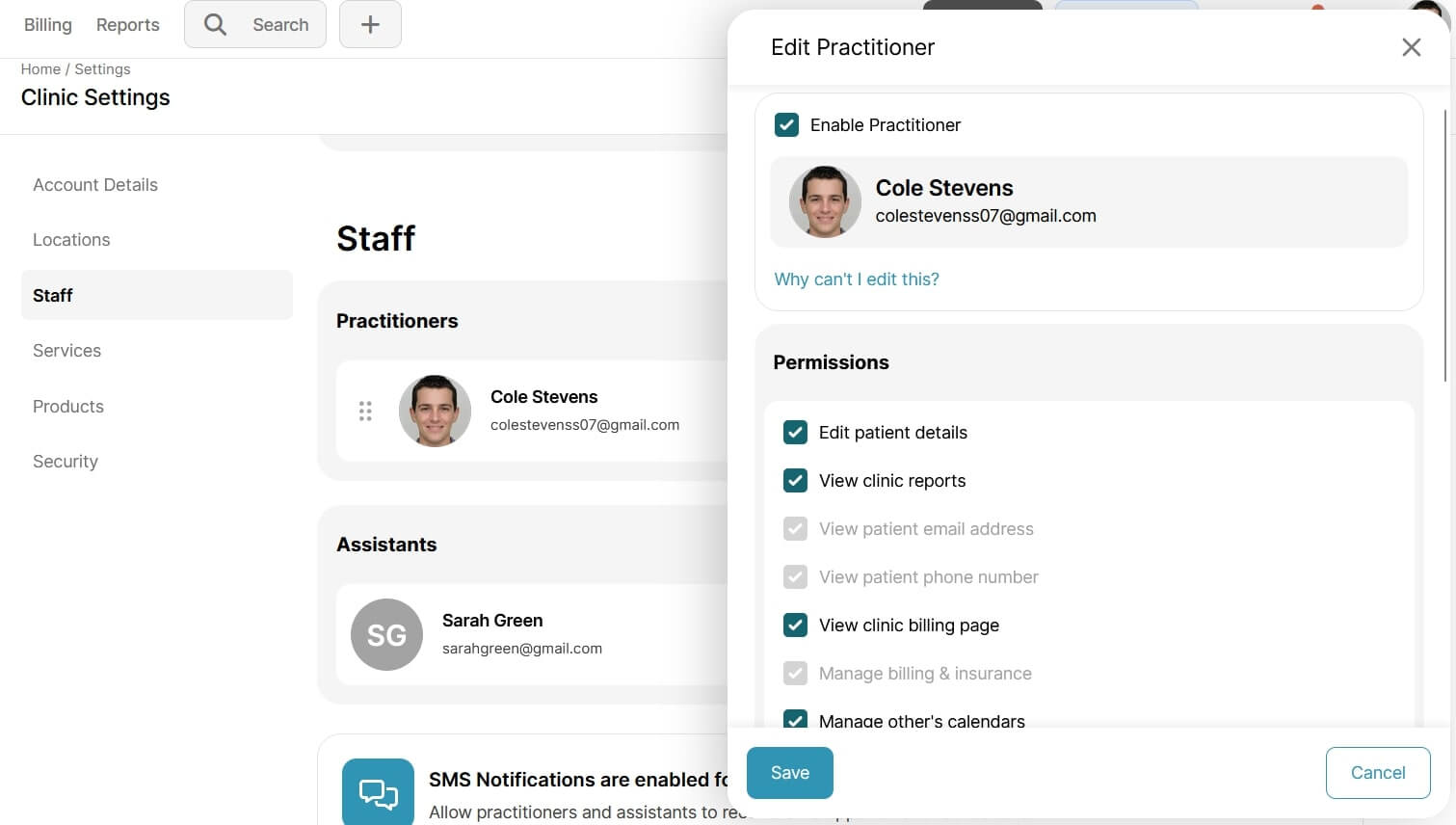
How Noterro Helps: Noterro supports your team with role-based permissions, so each staff member only sees the information they need to do their job. Shared templates ensure consistency in the completion of notes and documentation. Plus, the platform provides built-in guidance and support to help your team follow compliance standards without confusion.
Since we are talking about compliance, you might also want to browse through this guide: What Chiropractors Need to Know About MIPS and MACRA Compliance
Compliance and malpractice protection don’t have to be complicated. With the right systems in place that support clear documentation, secure consent workflows, and strong communication habits, you can protect your practice and focus on what you do best: treating patients.
The right systems not only keep you compliant but also make your day-to-day operations more efficient and smoother. Noterro is built to do just that, helping you streamline these processes so you can spend more time providing care and less time worrying about paperwork.
Start your 14-day free trial today and see how Noterro can support you in running a compliant, efficient, and stress-free practice.

Tags
Ryan Barichello, Co-Founder of Noterro, is a dynamic leader with a vision for innovation and excellence in the tech industry. With both a Business and Computer Science diploma from Mohawk College, Ryan has honed his business and software development expertise.
His leadership and dedication have garnered him several prestigious awards, including the 2018 Fast 40 Hamilton issued by Hamilton Economic Development. He also received the 2015 Outstanding Small Business of the Year from the Stoney Creek Chamber of Commerce and the 2013 Hamilton Top 40 Under 40 from Business Link Media.
Beyond his professional achievements, Ryan is deeply involved in community initiatives. As a board member of Festitalia for 9 years, he actively promoted Italian culture and heritage in the community. He also has spent time volunteering as a mentor in Greater Hamilton Teaching Youth Entrepreneur Program (M.I.G.H.T.Y), nurturing the next generation of leaders.
With a keen eye for detail and a disciplined approach, Ryan tackles challenges with precision, ensuring that every project he undertakes is a resounding success. Ryan's strategic mindset and passion for entrepreneurship have been instrumental in propelling Noterro to the forefront of the industry.
Driven by a relentless pursuit of excellence, Ryan is passionate about technological innovation. His expertise in addressing complex challenges with precision, alongside his dedication to innovation, sets him apart as a leader in the technology field.
.webp)
No credit card required. Available 1-on-1 support.
.webp)
No credit card required. Available 1-on-1 support.
.webp)
.webp)


.webp)